The complete guide to studying MBBS in China in 2027: who can apply, which universities are MOE listed, what an English taught MBBS costs, and how to prepare an application to Xinjiang Medical University (XJMU).
MBBS in China is the undergraduate clinical medicine degree that Chinese universities offer to international students. It runs for six years: five years of pre-clinical and clinical study, then a one-year internship in a teaching hospital. At universities approved by China's Ministry of Education (MOE), the whole programme is taught in English.
Students who are planning MBBS in China 2027 are in a good position, because the important decisions can be made early. The official list of MOE listed MBBS universities is public, fee structures are published, and the application steps are the same every year. This guide collects those facts in one place and uses Xinjiang Medical University as the worked example throughout.
Two things are not known yet, and this page says so plainly. The MOE has not published its list for the 2027–2028 academic year, and fees for 2027 have not been announced. Until they are, the 2026–2027 list and the 2026 fee structure are the official reference points. We update this page whenever a new notice is released.
| Question | Answer |
|---|---|
| Degree | MBBS (Bachelor of Medicine and Bachelor of Surgery) |
| Duration | 6 years, including a 1-year clinical internship |
| Language | English at MOE listed universities |
| Who approves the universities | China's Ministry of Education (MOE) |
| Current approved list | 43 universities, 2,790 seats (2026–2027 academic year) |
| XJMU seats on the current list | 60 |
| XJMU MBBS intakes | Spring (February/March) and fall (September) |
| XJMU first-year package (2026 intake) | ¥49,950, about USD 7,000 |
| XJMU minimum eligibility | 60% in each science subject; age 18–35 |
Students choose MBBS in China for four practical reasons: the degree is taught in English, the universities are government approved, the clinical training happens in large public hospitals, and the cost is far lower than private medical education in most countries.
China does not leave English taught MBBS to individual universities. Every year the Ministry of Education decides which universities may enrol international students in the programme and how many seats each one gets. A university that is not on the list may not issue an English-language MBBS degree certificate. That gives applicants a simple test: if the university is on the list, the programme is authorised.
Medicine is learned at the bedside. Chinese medical universities are attached to their own hospitals, so clinical rotations and the internship year are part of the degree and do not have to be arranged separately. At Xinjiang Medical University, clinical training runs across 8 directly affiliated hospitals. The First Affiliated Hospital is a Class A tertiary hospital, the highest grade in China's hospital system.
Fees are published in advance and paid once a year. At XJMU the first-year package for the September 2026 intake is ¥49,950, about USD 7,000, and each later year totals about ¥35,950. Food and personal costs in Urumqi typically add USD 150–250 a month. A family can therefore estimate the cost of the full six years before applying.
Xinjiang Medical University is listed in the WHO World Directory of Medical Schools and is approved by China's Ministry of Education. Graduates are awarded the MBBS degree and are eligible to sit the medical licensing examinations of their home countries. Every country sets its own rules for foreign medical graduates, so check the current rules of your own medical council before you apply.
The single most important check for MBBS in China 2027 is whether the university is MOE listed. The list in force is the notice issued on 1 June 2026 for the 2026–2027 academic year. It approves 43 universities with a combined quota of 2,790 seats for international students.
The notice sets out clear rules. Only listed universities may enrol international students in English taught MBBS. Unlisted universities may only admit international students to Chinese-medium clinical medicine programmes. Using a bilingual teaching model as a workaround is prohibited, and universities that break the rules face enrolment restrictions or suspension.
People often search for a registered MBBS university in China, or an approved or recognised one. In practice those phrases all point to the same thing: a university on the MOE list. Xinjiang Medical University is on the 2026–2027 list with 60 seats.
Source: Ministry of Education of the People's Republic of China, notice 教外司来〔2026〕94号, issued 1 June 2026.
See the full list of 43 MOE listed universitiesRequirements differ a little from one university to another. These are the published requirements for the MBBS programme at Xinjiang Medical University:
You need a completed high-school qualification with a science background. For students from Pakistan that is FSc Pre-Medical or an equivalent; for students from other systems it is the twelfth-grade or A-level qualification with science subjects. The minimum is 60% marks in each of the science subjects, and stronger marks help when seats are limited.
The programme is taught in English, so you must be able to study in English. Proof can be an English test such as IELTS or TOEFL, or evidence that your previous education was in English. Exemptions may apply for students from English-speaking countries.
Applicants should be between 18 and 35 years of age, in good health and free from communicable diseases. A Chinese physical examination form and blood report are part of the application, and the examination and is repeated after arrival in China for the residence permit.
Your home country may add its own conditions for students who study medicine abroad, such as an entrance test or a minimum score. These rules belong to your medical council and they change, so read the current version before you pay any fee.
Fees for 2027 have not been announced. For planning, use the published structure for the September 2026 intake at XJMU. The first year is charged as one all-inclusive package, and later years are charged per item.
From the second year the yearly total is about ¥35,950, roughly USD 5,050. It is made up of tuition of ¥30,000, accommodation of ¥4,500, insurance of ¥300, the residence permit of ¥800 and the physical examination of ¥350.
Living costs are separate from university fees. Food typically costs USD 150–250 a month, local transport USD 10–20 and a mobile SIM USD 10–15. Urumqi has a large Muslim community, so halal food is easy to find on and around campus.
You do not pay the whole first-year package at once. The ¥1,000 application fee comes first and counts towards the package. After the Pre-Admission Letter you pay a ¥2,000 seat reservation deposit, which is refunded if your JW202 is rejected. Within the package, the visa, health insurance and medical check-up charges, ¥1,450 a year in total, are paid directly to the relevant departments.
The Chinese Government Scholarship covers tuition, accommodation and insurance and pays a yearly stipend of 30,000 yuan to undergraduates. The Xinjiang Government Scholarship for international students from neighbouring countries pays undergraduates 10,000 yuan a year. The university also has its own Xinjiang Medical University Scholarship. Each has its own eligibility rules and deadline, and applying early is recommended.
| What the first-year package covers | Status |
|---|---|
| Application processing, registration and admission charges | Included |
| Tuition fee | Included |
| Hostel accommodation | Included |
| Student visa, health insurance and medical | Included |
| JW202 visa letter and airport pickup | Included |
| Total: ¥49,950 (about USD 7,000) |
Figures are indicative for the 2026 intake; USD conversions are approximate.
See the full MBBS fee breakdownScholarships reduce the cost of studying medicine in China, and some cover it completely. These are the stipend levels published by Xinjiang Medical University.
| Scholarship | Undergraduate | Master's | Doctoral |
|---|---|---|---|
| Chinese Government Scholarship (tuition, accommodation and insurance free) | 30,000 | 36,000 | 42,000 |
| Xinjiang Government Scholarship for students from neighbouring countries | 10,000 | 12,200 | 15,000 |
Scholarship places are limited and competitive. Apply by the early deadline to be considered.
See all scholarships at XJMUThe MBBS programme at XJMU has two intakes a year: spring, starting in February or March, and fall, starting in September. The university's admissions calendar publishes the same milestones each year, shown below. Dates may vary by programme, so confirm them with the admissions office before you plan travel.
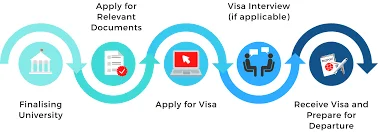
Applications for the spring intake opened on 1 September. The early deadline is 15 December, the regular deadline is 15 January 2027, and registration and orientation take place around 20 February 2027. If you want to begin your MBBS in China in early 2027, this is the intake to apply for now.
Applications for the fall intake open on 1 March. The early deadline of 30 June is the one to aim for, because it is the recommended deadline for scholarship consideration and it leaves time for the visa. The regular deadline is 15 August, and registration and orientation take place around 10 September.
| Step | Fall intake (September) | Spring intake (February/March) |
|---|---|---|
| Applications open | 1 March | 1 September |
| Early deadline (recommended for scholarships) | 30 June | 15 December |
| Regular deadline | 15 August | 15 January |
| Registration and orientation | 10 September | 20 February |
The application has eight steps. None of them is difficult, but each needs the right document at the right time.
Gather your passport, a white-background photograph, the XJMU application form, the Chinese physical examination form and blood report, a police non-criminal record certificate, your senior high-school transcripts and certificates, and a short self-introduction video.
Fill in the online application form on the admissions portal and upload your documents. The portal lets you track your application and message the admissions team.
Submit your complete documents with the application fee of ¥1,000 to apply for the Pre-Admission Letter. The fee is non-refundable once the Pre-Admission Letter is issued, and it is included in the first-year package.
The admissions committee reviews your file. This takes two to four weeks.
Some programmes ask for a short online interview with faculty members.
After the Pre-Admission Letter, you pay a seat reservation deposit of ¥2,000 so that the university can process your JW202 form and the Formal Admission Notice. If your JW202 is rejected for any reason, this amount is refunded.
Use the admission documents to apply for an X1 or X2 student visa at the Chinese embassy or consulate in your country.
Arrive before the registration deadline and complete enrollment, the health check and the residence permit.
Read the full how-to-apply guideThe English taught MBBS follows the same broad structure at every MOE listed university. Students first build a foundation in the basic medical sciences, then move into clinical medicine, and finish with a full year of supervised hospital work.
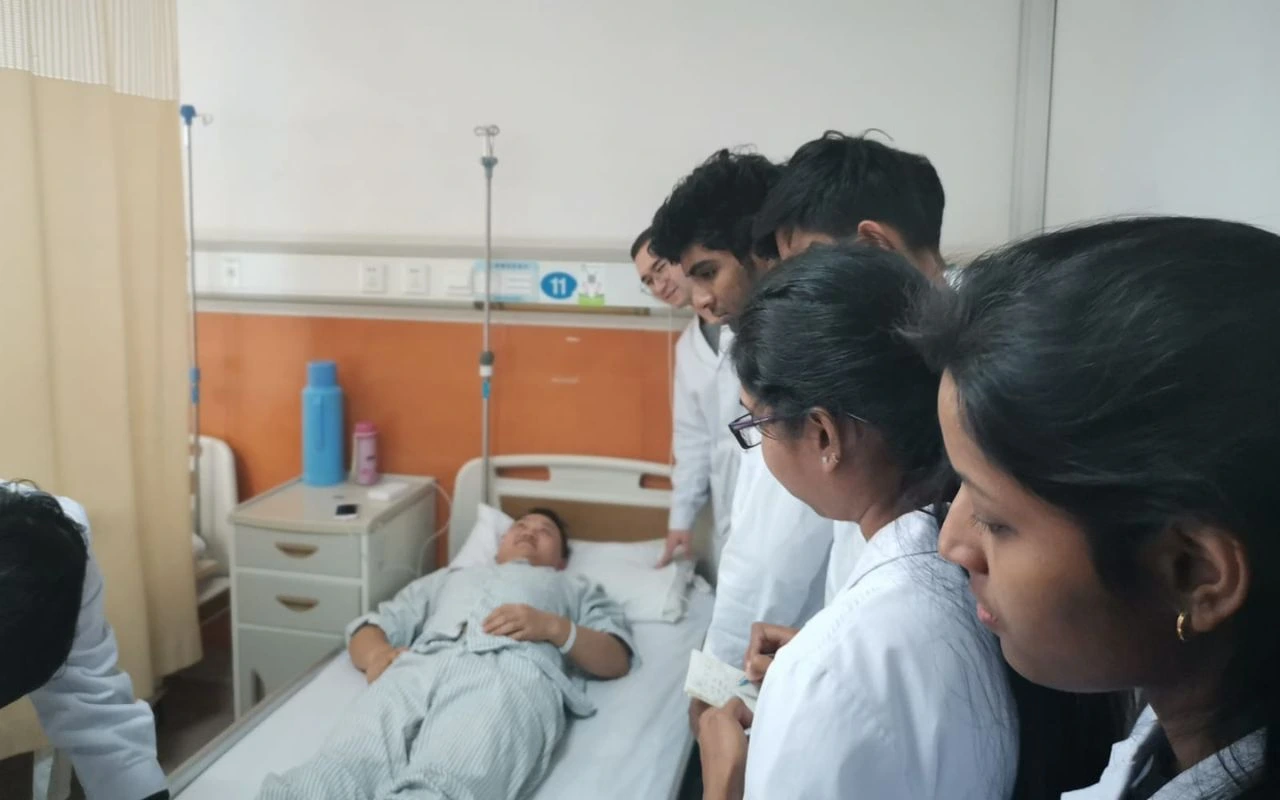
The early years cover subjects such as Human Anatomy, Physiology, Biochemistry, Pathology and Pharmacology, taught through lectures and laboratory work.
The middle years move to Internal Medicine, Surgery, Paediatrics, Obstetrics and Gynaecology, Community Medicine and Emergency Medicine, with increasing time on hospital wards.
The sixth year is a one-year clinical internship, rotating through the main hospital departments under supervision.
See the MBBS curriculum at XJMUXinjiang Medical University was founded in 1956 in Urumqi and is the largest provincial-ministerial joint medical university in Xinjiang. It has been approved for English taught MBBS since the Ministry of Education first published its list, and it holds 60 seats on the current one.
For students from Pakistan and Central and South Asia, the location is a practical advantage. Urumqi is the Chinese provincial capital closest to Pakistan, with a direct flight from Islamabad of under three hours. The city is culturally familiar to many international students, and halal food is widely available.
The university supports international students with a dedicated team, pre-arrival guidance, and help with the visa and documentation.

Six years is a long time, so daily life matters as much as the timetable. International students at XJMU live in university accommodation, which is included in the fee structure, and study alongside classmates from many countries.
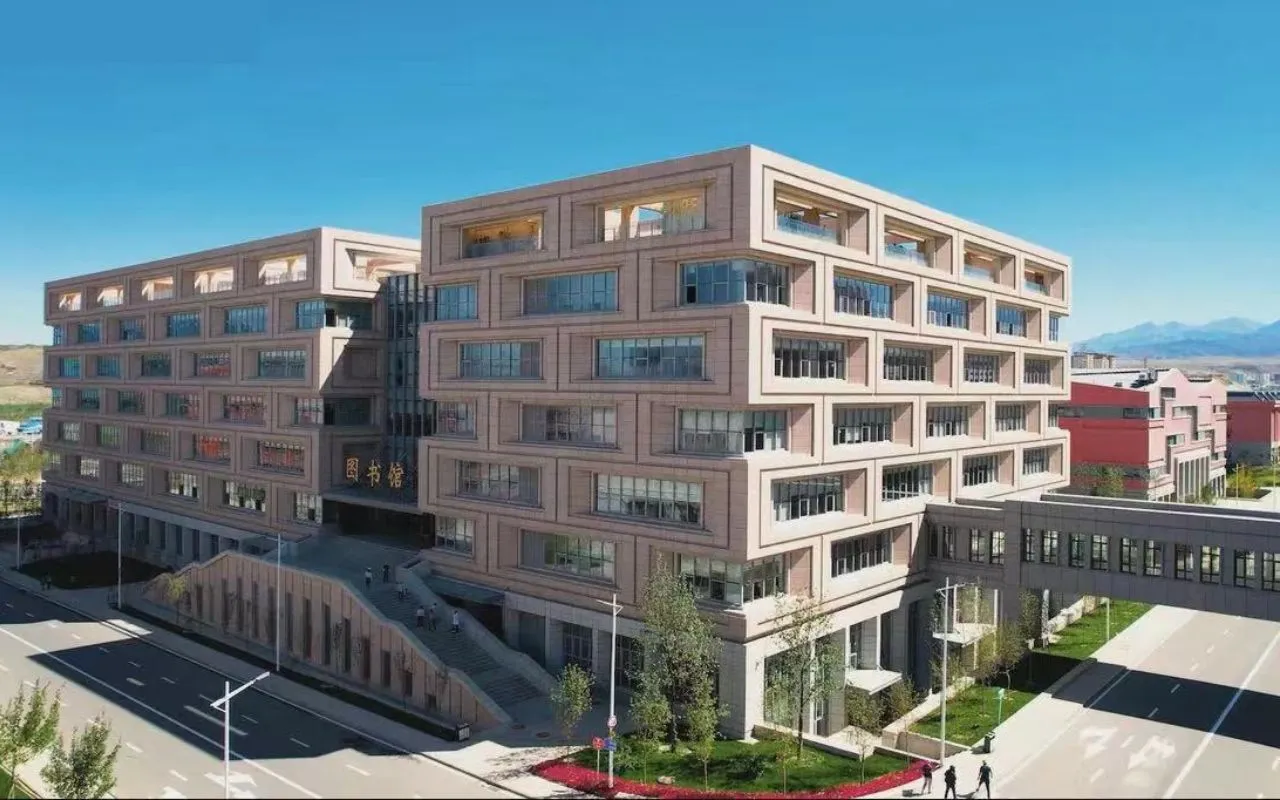
The campus has a library, sports grounds and student societies, and the city offers bazaars, parks and mountain scenery within reach. Students organise their own cricket matches and cultural events, and university festivals bring the whole campus together.
Before you travel, the admissions team sends pre-arrival guidance, and airport pickup is included in the first-year package.

Most delays in an MBBS application come from documents, not from marks. Start collecting them months before the portal opens, because notarisation and translation take time.
Scan every document clearly in colour and keep both the original-language version and the translation. Use exactly the same spelling of your name on every document as in your passport, because a mismatch between the passport and a certificate is the most common reason an application is sent back.
Applications without the required documents are not processed, so upload a complete set the first time. If a document is still on its way, tell the admissions team in the portal before the deadline, not after it.
Every year some students lose money or a full academic year to mistakes that are easy to avoid. These are the ones that matter most.
Some universities and agents advertise an MBBS in English or a bilingual programme without being on the Ministry of Education list. Under the MOE notice, those universities may only teach clinical medicine to international students in Chinese and may not issue an English-language MBBS certificate. A degree from an unlisted programme may not be recognised by your home licensing body. Always check the list yourself.
A low tuition figure can hide separate charges for the hostel, insurance, the residence permit, registration and the visa letter. Ask for the total for the first year and for each later year. XJMU publishes both: an all-inclusive first-year package and an itemised yearly total.
Seats under the MOE quota are limited, visa appointments fill up, and scholarships favour early applicants. Treat the early deadline as your real deadline.
Recognition is decided at home, not in China. Before you commit, read your medical council's current requirements for students who study abroad, including any entrance test and the licensing examination you will sit after graduation.
An MBBS is the start of a medical career, not the end of it. After graduation, doctors register in the country where they want to practise, and each country has its own licensing route.
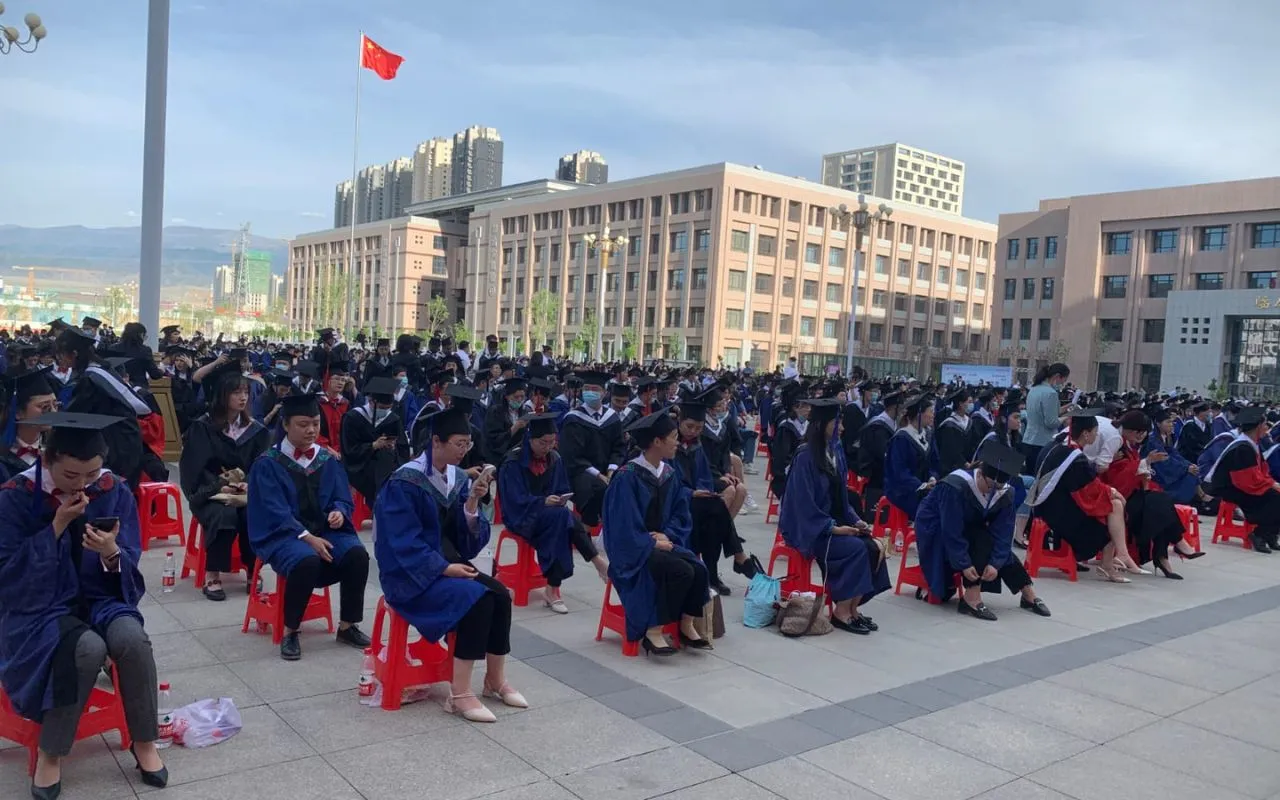
Most graduates return to their home country, sit the national licensing examination for foreign medical graduates and complete any required house job or internship there. XJMU graduates are eligible to appear for the licensing examinations of their home countries.
Some graduates prepare for international examinations instead, such as the USMLE for the United States, the UK licensing assessment, or the AMC examinations for Australia. These routes are open to graduates of schools in the World Directory of Medical Schools, subject to each regulator's own conditions.
Others continue into postgraduate medical training or a master's degree. Xinjiang Medical University offers master's and doctoral programmes alongside the MBBS, so further study in Urumqi is possible.
Use this plan to stay ahead of the deadlines, whether you start in spring or in September 2027.
Deadlines are from the published admissions calendar and may vary. The date of the next MOE notice is not known; the June timing is based on the 2026 notice.
The 43 universities that China's Ministry of Education has approved to teach MBBS in English to international students, with seat quotas, the rules behind the list and how to check any university yourself.
How an English taught MBBS works at an MOE listed university: who is allowed to teach it, what you study each year, how much Chinese you need, and what it costs at Xinjiang Medical University.
Talk to our admissions counsellors for free guidance, or start your application online.