Everything a Pakistani student and family need to decide on an MOE listed MBBS in China: eligibility after FSc, fees, intakes, travel from Islamabad, recognition at home and how to apply to Xinjiang Medical University.
Every year thousands of Pakistani students finish FSc and look for a way to study medicine that fits their marks, their budget and their family. China is one of the options they consider, and for good reasons: the programme is taught in English, it lasts six years, the fees are published, and the universities that may teach it are named on an official government list.
This guide is written for Pakistani students and their parents. It uses Xinjiang Medical University (XJMU) in Urumqi as the example, because it is on the Ministry of Education (MOE) list of universities that may enrol international students in the English taught MBBS, it has 60 seats on that list for 2026–2027, and it is one of the closest places in China to Pakistan.
It also tries to be honest about what we cannot promise. Fees for 2027 have not been announced, and the rules of Pakistan's own medical regulator can change, so where a decision depends on a rule that belongs to someone else, this guide tells you where to check it rather than guessing.

| Question | Answer |
|---|---|
| Degree | MBBS, taught in English |
| Duration | 6 years, including a 1-year clinical internship |
| Approved by | China's Ministry of Education (MOE list, 2026–2027) |
| Seats for international students | 60 |
| Minimum marks | 60% in each of the science subjects |
| Age | 18 to 35 |
| First-year package (Sept. 2026 intake) | ¥49,950, about USD 7,000 |
| Each later year | About ¥35,950, about USD 5,050 |
| Intakes | Spring (February/March) and fall (September) |
| Flight from Islamabad | About 2 hours 50 minutes, direct |
Medical colleges in Pakistan have limited seats, and the competition for them is intense. A student with good FSc marks can still miss a seat at a public college by a fraction of a mark, and private fees are high. Studying abroad is the practical alternative for many families, and China offers a combination that is hard to find elsewhere.
It is not a shortcut, and it is not easy. You will live far from home for six years, study a demanding course in your second language, and learn Chinese on top of it. The students who do best treat the degree as seriously as a seat in Lahore or Karachi.
Before you look at fees or cities, check that the university is on the MOE list. The Ministry of Education notice of 1 June 2026 approves 43 universities and 2,790 seats for the 2026–2027 academic year. Xinjiang Medical University is number 8 on the list, with 60 seats.
This matters more than any brochure. The notice states that universities outside the list may admit international students only to Chinese-medium clinical medicine, and may not issue an English-language certificate bearing the term MBBS. If someone offers you an English taught MBBS at a university that is not on the list, ask them to show you where it appears in the official notice.
Source: Ministry of Education of the People's Republic of China, notice 教外司来〔2026〕94号, issued 1 June 2026.
Check all 43 MOE listed universitiesThe published requirements for the MBBS at XJMU are short and clear. They apply to students from every country, including Pakistan.

A student with FSc Pre-Medical, with Physics, Chemistry and Biology, fits the requirement for a senior high-school certificate with science subjects. Students with A-Levels or an equivalent qualification in the same sciences also fit. Each of the science subjects must carry at least 60% marks.
If you are still waiting for your final result, you can start the application with your available marks and documents and provide the final certificate when it is issued. Ask the admissions team how to do this for your case.
Applicants must be aged between 18 and 35. A student who finishes FSc at 17 can apply once they turn 18.
The published XJMU requirements do not include MDCAT. Admission to the university is based on your senior high-school results and your documents. That is a separate question from what Pakistan's medical regulator requires before it allows a student to study medicine abroad or to register after returning. Rules on this have changed in recent years, so check the current position with the regulator before you pay any fee.
Fees for 2027 have not been announced. These are the published figures for the September 2026 intake, which is the best guide to what to expect. They are given in Chinese yuan and in approximate US dollars. We do not print rupee figures, because the exchange rate moves from month to month; convert the yuan amounts at the rate on the day you pay.
From the second year, the fees are charged item by item, as the table below shows. The total is about ¥35,950 a year, about USD 5,050.
| What the first-year package covers | Status |
|---|---|
| Application processing, registration and admission charges | Included |
| Tuition fee | Included |
| Hostel accommodation | Included |
| Student visa, health insurance and medical | Included |
| JW202 visa letter and airport pickup | Included |
| Total: ¥49,950 (about USD 7,000) |
Adding the first-year package and five later years gives a rough tuition and hostel total for the whole degree.
First year: ¥49,950. Years 2 to 6: five times ¥35,950, which is ¥179,750. Together that is about ¥229,700, or roughly USD 32,000, for tuition, hostel, insurance, residence permit and medical examinations over six years, using the 2026 figures.
This estimate does not include flights, food and personal spending, or any change in fees for 2027 or later years. Use it as a planning figure and ask the admissions team for the current written fee schedule before you commit.
Budget about USD 150–250 a month for food, USD 10–20 for local transport and USD 10–15 for a mobile SIM. Over twelve months, food alone is roughly USD 1,800 to 3,000.
When you compare universities, compare the full yearly total, not tuition alone. A low tuition figure with separate charges for the hostel, insurance, residence permit and examinations can cost more than a package that includes them. Ask every university for the first-year total and the later-year total in writing.
| Item | Amount (RMB ¥) |
|---|---|
| Tuition fee | ¥30,000 |
| Accommodation | ¥4,500 |
| Insurance | ¥300 |
| Residence permit | ¥800 |
| Physical examination | ¥350 |
| Total per year: ¥35,950 (about USD 5,050) |
This is the question every Pakistani family asks first, and it deserves a careful answer. Recognition has three layers, and each is decided by a different body.
Pakistani students who graduate from a medical school abroad are generally required to pass a licensing examination set by the national regulator before they can register and practise. Graduates of XJMU are eligible to appear for the licensing examinations of their home countries and for international examinations such as the USMLE.
The details of that examination, including the eligibility conditions, the fees and the number of attempts allowed, are set by the regulator and are updated from time to time. Read them from the regulator's own website, not from an agent's summary.
Ask whether the university is on the current MOE list. Ask whether it appears in the World Directory of Medical Schools. Then read the regulator's current rules for foreign medical graduates and any conditions for students who plan to study abroad. If any answer is unclear, wait until it is clear.
The MBBS in China is a six-year programme, one year longer than the five-year MBBS that Pakistani students know from home. The extra year is a full clinical internship.
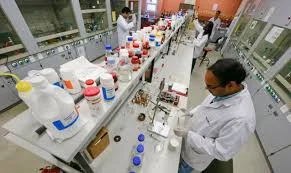
Anatomy, physiology, biochemistry, histology and the foundational sciences, taught in English with laboratory sessions. Introductory Chinese is taught alongside them.
Pathology, pharmacology, microbiology, immunology and forensic medicine.
Internal medicine, surgery, paediatrics, obstetrics and gynaecology and specialty rotations, with teaching at the bedside in the affiliated hospitals.
A year of supervised rotations through the major departments. Students use the Chinese they have learned to take histories and examine patients.
See the full MBBS programmeThe medical programme is taught entirely in English, so you do not need Chinese to be admitted or to follow lectures. You do need to show that you can study in English, either with an IELTS or TOEFL result or with proof that your previous education was taught in English. Many Pakistani students study in English-medium schools or colleges, and a letter from the school confirming the medium of instruction is often enough.
Chinese is a part of the degree. Introductory Chinese is taught in years 1 and 2, and HSK-4 Chinese proficiency is required by graduation to support clinical rotations. Patients in the teaching hospitals speak Chinese, and a doctor who cannot talk to the patient cannot take a history. Students who attend every Chinese class and practise a little every day reach the level without difficulty.

Start collecting documents early. Some of them take weeks to obtain, and the application cannot be completed without them.
Ask your school or board for the transcripts and certificates, the police station or the relevant office for the non-criminal record certificate, and a doctor for the physical examination form and blood report. Have the documents notarised as the admissions team instructs. Scan every page clearly, because blurred copies are the most common reason for delays.
The video is short. In it, you say that you have chosen XJMU and that you will study there if accepted. Record it in a quiet room, speak clearly and keep it simple.
The application is made online, and its progress is visible in the student portal. Do not pay anyone to apply on your behalf without checking what the payment covers.
MBBS in China has two intakes a year. The fall intake starts in September and is the larger one. The spring intake starts in February or March, and it suits Pakistani students who finish exams or receive results in the winter, or who do not want to wait until September.
For spring 2027, applications opened on 1 September, with an early deadline of 15 December and a regular deadline of 15 January. For fall 2027, applications open on 1 March, with an early deadline of 30 June and a regular deadline of 15 August. Apply by the early deadline if you also want to be considered for scholarships.
| Step | Fall intake (September) | Spring intake (February/March) |
|---|---|---|
| Applications open | 1 March | 1 September |
| Early deadline (recommended for scholarships) | 30 June | 15 December |
| Regular deadline | 15 August | 15 January |
| Registration and orientation | 10 September | 20 February |
Urumqi is among the closest cities in China to Pakistan. A direct flight from Islamabad takes about 2 hours 50 minutes, which is shorter than many domestic journeys within a large country. That makes it practical to visit family during a break, and practical for parents to visit you.
The first-year package includes the student visa, the JW202 visa letter and airport pickup, so a first-time traveller is met on arrival and taken to the university. You still need to book your own flight and to arrive before registration.
Winters in Urumqi are cold, so bring or plan to buy warm clothing. Bring your original documents in hand luggage, copies of your passport and admission letter, and any regular medication with the prescription.
Registration, the medical check and the residence permit are handled with the help of the international student office. Keep your documents together and ask questions early.
Urumqi is the capital of Xinjiang and a large, modern city with bazaars, parks and mountains nearby. For many Pakistani students it feels less foreign than they expect. Halal food is widely available, the food culture includes bread, lamb and tea that are familiar, and the city has a long history of trade with the countries to its west.
Accommodation is in university hostels and is included in the fees. Students from several countries live and study together, and the university runs cultural and sports activities throughout the year.
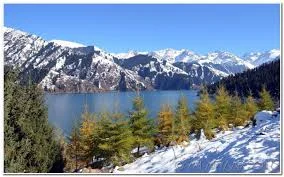
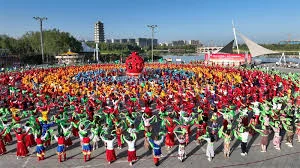
Xinjiang is home to many communities, and festivals and performances are part of city life. International students are invited to take part in the university's cultural activities.
The time difference between Pakistan and Xinjiang is small, so evening calls with family are easy to arrange.
Xinjiang Medical University has 8 directly affiliated hospitals, so clinical teaching does not depend on a single site. The First Affiliated Hospital is the largest of them and a Class A tertiary hospital, the highest grade in China's hospital system.
From year 4, teaching moves to the bedside, and in year 6 you rotate through the main departments under supervision for a full year. Pakistani students who plan to work at home should use the internship year to build the practical confidence that licensing examinations and house jobs ask for.

Pakistani students can apply for the Chinese Government Scholarship, which covers tuition, accommodation and insurance, and pays a yearly stipend. The Xinjiang Government Scholarship is for students from neighbouring countries, and the figures below are the published amounts.
Places are limited and are awarded on merit, so treat a scholarship as a bonus and not as the basis of your budget. Apply by the early deadline to be considered.
| Scholarship | Undergraduate | Master's | Doctoral |
|---|---|---|---|
| Chinese Government Scholarship (tuition, accommodation and insurance free) | 30,000 | 36,000 | 42,000 |
| Xinjiang Government Scholarship for students from neighbouring countries | 10,000 | 12,200 | 15,000 |
Parents carry the financial and emotional weight of this decision, and they ask good questions. These are the ones we hear most.
Students live in university hostels, are met at the airport and are supported by the international student office. Parents can reach the admissions team by phone, email and WhatsApp. Visit the university's pages and talk to the admissions team to see what is available.
Graduates are eligible to sit the licensing examination of their home country. Passing it, and meeting the regulator's other conditions, is what leads to registration. Read the current rules together before you decide.
Using the 2026 figures, about ¥229,700 for six years of tuition, hostel, insurance, residence permit and examinations, which is roughly USD 32,000, plus food, flights and personal spending.
Ask the admissions team for the current payment schedule in writing. The application fee and the seat reservation deposit are paid at defined steps, and the rest follows the university's published fee schedule.
Ask where the university appears in the MOE list, ask for the fees in writing, and pay fees only through the channels the university states. Our own application is online, and you can see its status yourself.
Most problems can be avoided before you apply, and none of these mistakes is hard to fix early.
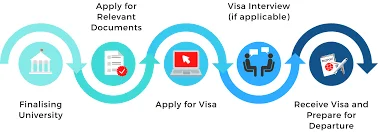
A typical timeline for a Pakistani student aiming for the fall intake looks like this. Adjust it for the spring intake by moving every date six months earlier.
| When | What to do |
|---|---|
| Before March | Check eligibility, the MOE list and the regulator's rules. Decide on your budget. |
| From 1 March | Applications open. Prepare documents and record the self-introduction video. |
| By 30 June | Early deadline, recommended for scholarship consideration. |
| By 15 August | Regular deadline. |
| Two to four weeks after review | Admission letter and JW202 form. |
| Before 10 September | X1 visa, flight and arrival. Registration and orientation follow. |
The complete guide to studying MBBS in China in 2027: who can apply, which universities are MOE listed, what an English taught MBBS costs, and how to prepare an application to Xinjiang Medical University (XJMU).
The 43 universities that China's Ministry of Education has approved to teach MBBS in English to international students, with seat quotas, the rules behind the list and how to check any university yourself.
How an English taught MBBS works at an MOE listed university: who is allowed to teach it, what you study each year, how much Chinese you need, and what it costs at Xinjiang Medical University.
Talk to our admissions counsellors for free guidance, or start your application online.