How scholarships work for international MBBS students at Xinjiang Medical University: the published stipends, how the Chinese Government Scholarship and the Xinjiang Government Scholarship differ, when to apply, which documents you need and how to avoid scholarship scams.
Searches for an MBBS in China scholarship often promise a fully funded degree. Some students do receive generous support, but the details matter, and a headline that sounds too good deserves a careful look. This guide explains what is published for Xinjiang Medical University (XJMU), which is number 8 on the Ministry of Education (MOE) list of universities approved to teach the English taught MBBS to international students for 2026–2027.
Two scholarships are listed in the published fee structure: the Chinese Government Scholarship, often called the CSC scholarship, and the Xinjiang Government Scholarship for students from neighbouring countries. Each has a stipend, which is a yearly amount paid to the student.
Scholarship places are limited and competitive. A scholarship can lower your costs a great deal, but you should not plan your finances as if you will certainly receive one. Apply for admission and for the scholarship together, and have a plan for paying the fees if the scholarship is not awarded.

These are the stipends listed in the university's fee structure, in yuan per person per year. The Chinese Government Scholarship also covers tuition, accommodation and insurance, which is why it is far more valuable than the stipend figure alone suggests.
For an undergraduate student, which includes MBBS, the Chinese Government Scholarship stipend is 30,000 yuan a year, and the Xinjiang Government Scholarship stipend is 10,000 yuan a year. The higher amounts are for master's and doctoral students.
A stipend is money paid to you to help with living costs. It is separate from tuition. When a scholarship covers tuition and accommodation as well, the stipend is the part that you actually receive.
| Scholarship | Undergraduate | Master's | Doctoral |
|---|---|---|---|
| Chinese Government Scholarship (tuition, accommodation and insurance free) | 30,000 | 36,000 | 42,000 |
| Xinjiang Government Scholarship for students from neighbouring countries | 10,000 | 12,200 | 15,000 |
The Chinese Government Scholarship is offered by the Chinese government to international students. As published for XJMU, it makes tuition, accommodation and insurance free, and pays an undergraduate stipend of 30,000 yuan a year.
Competition is strong, because it is the most valuable award. Students who are considered usually have strong academic results, a complete file and an early application. We do not publish the number of CSC places for MBBS, and we do not promise that a student will receive one.
Apply by the early deadline, submit every document, make sure your marks are clearly shown and write a self-introduction that is honest and specific. Ask admissions whether any additional forms are needed for the scholarship.
Ask whether the scholarship is awarded for the whole programme or renewed each year, what results you must keep to continue to receive it, and what happens if you do not meet them.
The Xinjiang Government Scholarship is intended for students from neighbouring countries. The published undergraduate stipend is 10,000 yuan a year. It is smaller than the CSC stipend, but it is a real help with everyday costs.
Whether your country counts as a neighbouring country for this purpose, and how many places are open to you, are questions for the admissions office. Ask in writing and keep the reply.
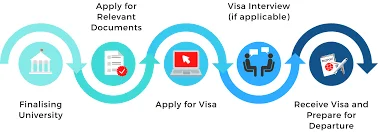
To be admitted to the MBBS at XJMU you must meet the published requirements. A scholarship is an extra step, so you must meet these first.
Scholarship programmes can set their own conditions, such as nationality, age limits or a minimum level of marks. Ask admissions for the current conditions before you apply, and do not rely on an old forum post.
The published calendar has an early deadline that is recommended for scholarships and a later regular deadline. If you want to be considered for a scholarship, treat the early deadline as your real deadline.
Applications open on 1 March, the early deadline is 30 June, the regular deadline is 15 August and registration and orientation are on 10 September.
Applications open on 1 September, the early deadline is 15 December, the regular deadline is 15 January and registration is around 20 February.
| Step | Fall intake (September) | Spring intake (February/March) |
|---|---|---|
| Applications open | 1 March | 1 September |
| Early deadline (recommended for scholarships) | 30 June | 15 December |
| Regular deadline | 15 August | 15 January |
| Registration and orientation | 10 September | 20 February |
A scholarship application normally uses the same file as the admission application. Prepare these documents early, because the medical report and the police certificate take time to obtain.
The video is your chance to speak to the admissions team. Say that you have chosen XJMU and will study there if accepted. Speak clearly, keep it short, explain why you want to be a doctor and mention one specific thing about the university that you have learned.
Keep a scanned copy of every document and a record of every email you send. If a file is lost, you can send it again in minutes.
The process is the same whether or not you hope for a scholarship, so you lose nothing by trying.
Not receiving a scholarship does not close the door to the MBBS. The fees are published, and many students pay them from family savings or other support.
Knowing the full cost helps you decide how much a scholarship would change your plan. The first-year package at XJMU is ¥49,950, about USD 7,000. From the second year the fee is about ¥35,950 a year, about USD 5,050.
| Item | Amount (RMB ¥) |
|---|---|
| Tuition fee | ¥30,000 |
| Accommodation | ¥4,500 |
| Insurance | ¥300 |
| Residence permit | ¥800 |
| Physical examination | ¥350 |
| Total per year: ¥35,950 (about USD 5,050) |
Scholarships attract scammers because students and families are hopeful. A few simple rules protect you.
Check that the university is on the MOE list for 2026–2027. XJMU is number 8 with 60 seats.
Check all 43 MOE listed universitiesA scholarship is usually conditional. You may be asked to maintain your results, attend classes, follow university rules and renew your documents each year. Ask admissions for the conditions in writing, and read them.
Students who keep their grades up and treat the scholarship as a responsibility tend to keep it. Those who fall behind early find it much harder to recover, so use the first year to build good study habits.
Students often ask which of the two scholarships to aim for. The honest answer is to apply for admission first, ask admissions which scholarships you are eligible for, and then let them guide you. The table below puts the published facts next to each other.
Where the fee structure does not state something, such as whether the Xinjiang scholarship covers tuition, do not assume. Ask admissions, and ask them to reply in writing.
| Chinese Government Scholarship (CSC) | Xinjiang Government Scholarship | |
|---|---|---|
| Who it is for | International students | Students from neighbouring countries |
| Undergraduate stipend | 30,000 yuan a year | 10,000 yuan a year |
| Tuition, accommodation, insurance | Free | Not stated in the fee structure |
| Master's stipend | 36,000 yuan a year | 12,200 yuan a year |
| Doctoral stipend | 42,000 yuan a year | 15,000 yuan a year |
It helps to turn the published figures into a six-year picture, so that you know what is at stake. These are rough illustrations based on the published rates, not promises.
The university fees over six years are the first-year package of ¥49,950 plus five years at ¥35,950, which is about ¥229,700, or about USD 32,000.
Tuition, accommodation and insurance are free, and you receive a stipend of 30,000 yuan a year as an undergraduate. That is a very large difference, which is exactly why competition is strong. Confirm in writing what the award covers, which items you still pay and for how many years it lasts.
The stipend is 10,000 yuan a year. Over five years that is a meaningful help with food and transport, which at the published estimates cost roughly USD 170 to 285 a month together.
Check the full fee structureThe self-introduction video is part of the required documents, and it is one of the few parts of the application that shows who you are. A short, clear video can make a file stand out.
Do not read from a script in a flat voice, do not exaggerate your achievements and do not copy someone else's video. Admissions staff watch many of these and notice sameness quickly.
Start earlier than you think you need to. The documents take longer than the form.

Decide on your intake, check your marks against the 60% requirement in each science subject and request your transcripts and certificates. Start the medical examination and the police certificate.
Record your video, collect your photographs and fill in the application form. Ask a teacher or counsellor to read the form for mistakes.
Submit everything. Do not wait for the last week, because a missing document can only be fixed if you have time to replace it.
Reply quickly to any email from admissions, and keep your phone and email ready. A late reply can lose a place.
A few ideas spread widely online and cause real disappointment.
Scholarship places are limited, and most applicants do not receive one. Plan for the fees.
Even a generous award may leave some costs to you, such as flights, books and personal spending. Read the award letter carefully.
No agent controls the award. If someone promises a guaranteed scholarship in return for a fee, walk away.
Scholarships are generally decided before you travel. The early deadline exists for this reason.
No one outside the selection process can tell you exactly how files are ranked, and we do not claim to. What we can say is that complete, clear and early files are easier to consider than incomplete, unclear and late ones.
Every required document is present, readable and in the right format. A blurred passport scan or a missing page of a transcript slows everything down.
Your name, date of birth and passport number are written the same way on every document. Differences in spelling between a certificate and a passport are a common reason for delay.
Files that arrive before the early deadline can be reviewed while places are still open. Files that arrive on the last day compete with all the others at once.
Do not alter marks, invent achievements or submit documents that are not yours. A false document can end an application and can follow you into your medical career.
Answer admissions emails within a day or two, and keep your phone number and WhatsApp active. Many students lose time because a message sat unread.
When you hear that you have been admitted, with or without a scholarship, the work is not finished. Read the offer carefully, and make sure you understand every line before you pay or sign.
Check that the name, passport number, programme and intake are correct. Check what the offer says about fees, the scholarship and the conditions for keeping it. If anything is unclear, write to admissions and ask for a clear answer, because a reply in writing protects you.
Then move on to the practical steps: the seat reservation deposit, the visa application with the JW202 letter, your medical checks, your flight and your packing list. Each of these has its own deadline, and missing one can delay your arrival by months. Make a simple checklist with dates, and share it with a parent or a friend who can remind you.
Finally, speak to a current student if you can. Students who are already in Urumqi can tell you what to expect in the first weeks, and what they wish they had known. That conversation is often the most valuable one you will have.
Read what life in Urumqi is likeTreat a scholarship as welcome news, not as the foundation of your plan. Work out what the full six years would cost without it, and decide how the family would pay. If the scholarship comes, the savings can go to travel, books and a reserve.
Talk to your child about the conditions. A scholarship comes with expectations, and students who understand them from the start meet them more easily.
A clear breakdown of what an MBBS in China costs at Xinjiang Medical University, an MOE listed university: the first-year package, the yearly fees after that, the payments you make before you travel, everyday living costs and a six-year total you can check yourself.
The complete guide to studying MBBS in China in 2027: who can apply, which universities are MOE listed, what an English taught MBBS costs, and how to prepare an application to Xinjiang Medical University (XJMU).
Everything a Pakistani student and family need to decide on an MOE listed MBBS in China: eligibility after FSc, fees, intakes, travel from Islamabad, recognition at home and how to apply to Xinjiang Medical University.
Talk to our admissions counsellors for free guidance, or start your application online.