There are 43 universities on the 2026–2027 Ministry of Education list. This guide shows how to compare them fairly: by city and climate, cost of living, fees, seats, distance from home and daily life, so you can choose with a scorecard instead of an advertisement.
Search for the best MBBS university in China and you will find dozens of lists, each with a different order. Most of them rank by whatever the agency selling the seat happens to represent. This guide does not rank universities. It shows you the questions that actually separate one choice from another, and gives you the facts we can stand behind.
The starting point is approval. In June 2026 the Ministry of Education (MOE) issued notice 教外司来〔2026〕94号, which lists 43 universities allowed to teach the English taught MBBS to international students in 2026–2027, with 2,790 places between them. Every university in this guide is on that list. A university that is not on it is not a safe choice, however cheap.
After approval, five things decide how the next six years feel: the climate of the city, the cost of living there, the tuition and what it includes, the distance from home, and the size and style of the city. A student from a hot country may struggle with a long northern winter. A student on a tight budget may find a coastal megacity too expensive. A student who wants halal food and a quiet routine may prefer a smaller city. None of these has a single right answer, so the job is to match them to you.
One honest note before we start. We are the admissions office of Xinjiang Medical University (XJMU) in Urumqi, number 8 on the list, with 60 places for international students. We print exact fees only for XJMU, because those are ours and we can verify them. For other universities we describe how to compare and where to find the current figure, instead of repeating numbers from agency websites that are often years out of date.

The MOE list is the filter that comes before every other comparison. It is the official record of which Chinese universities may teach the English taught MBBS to international students. Our MOE listed MBBS universities page prints the full table of 43 universities and seats. Below, the same universities are grouped by city and climate so you can see the geography at a glance.
Check three things for any university you are considering. First, that its name appears on the notice. Second, that the programme is the English taught MBBS or clinical medicine for international students, not a different course. Third, that the university's own international admissions page, not only an agent, confirms the fees and deadlines for the year you plan to apply. Names on the list can be similar to names of other institutions, so match the full name.
| University | City | Climate group | Seats |
|---|---|---|---|
| Jilin University | Changchun | Very cold winters | 100 |
| China Medical University | Shenyang | Very cold winters | 50 |
| Dalian Medical University | Dalian | Cold winters, hot summers | 120 |
| Capital Medical University | Beijing | Cold winters, hot summers | 70 |
| Tianjin Medical University | Tianjin | Cold winters, hot summers | 100 |
| Shandong University | Jinan | Cold winters, hot summers | 80 |
| Fudan University | Shanghai | Cool winters, hot humid summers | 40 |
| Xinjiang Medical University | Urumqi | Very cold winters | 60 |
| Nanjing Medical University | Nanjing | Cool winters, hot humid summers | 60 |
| Jiangsu University | Zhenjiang | Cool winters, hot humid summers | 70 |
| Wenzhou Medical University (incl. overseas campus) | Wenzhou | Cool winters, hot humid summers | 120 |
| Zhejiang University | Hangzhou | Cool winters, hot humid summers | 180 |
| Wuhan University | Wuhan | Cool winters, hot humid summers | 50 |
| Huazhong University of Science and Technology | Wuhan | Cool winters, hot humid summers | 80 |
| Xi'an Jiaotong University | Xi'an | Cold winters, hot summers | 120 |
| Southern Medical University | Guangzhou | Mild winters, hot humid summers | 100 |
| Jinan University | Guangzhou | Mild winters, hot humid summers | 30 |
| Guangxi Medical University | Nanning | Mild winters, hot humid summers | 60 |
| Sichuan University | Chengdu | Cool winters, hot humid summers | 70 |
| Chongqing Medical University | Chongqing | Cool winters, hot humid summers | 100 |
| Harbin Medical University | Harbin | Very cold winters | 60 |
| Beihua University | Jilin City | Very cold winters | 20 |
| Jinzhou Medical University | Jinzhou | Very cold winters | 40 |
| Qingdao University | Qingdao | Cold winters, hot summers | 30 |
| Hebei Medical University | Shijiazhuang | Cold winters, hot summers | 40 |
| Ningxia Medical University | Yinchuan | Very cold winters | 100 |
| Tongji University | Shanghai | Cool winters, hot humid summers | 40 |
| Shihezi University | Shihezi | Very cold winters | 120 |
| Southeast University | Nanjing | Cool winters, hot humid summers | 30 |
| Yangzhou University | Yangzhou | Cool winters, hot humid summers | 30 |
| Nantong University | Nantong | Cool winters, hot humid summers | 30 |
| Soochow University | Suzhou | Cool winters, hot humid summers | 30 |
| Ningbo University | Ningbo | Cool winters, hot humid summers | 50 |
| Fujian Medical University | Fuzhou | Mild winters, hot humid summers | 60 |
| Anhui Medical University | Hefei | Cool winters, hot humid summers | 80 |
| Xuzhou Medical University | Xuzhou | Cold winters, hot summers | 40 |
| Zhengzhou University | Zhengzhou | Cold winters, hot summers | 40 |
| Guangzhou Medical University | Guangzhou | Mild winters, hot humid summers | 80 |
| Shantou University | Shantou | Mild winters, hot humid summers | 20 |
| Kunming Medical University | Kunming | Mild all year | 70 |
| Southwest Medical University | Luzhou | Cool winters, hot humid summers | 40 |
| Xiamen University | Xiamen | Mild winters, hot humid summers | 50 |
| Shanghai Jiao Tong University | Shanghai | Cool winters, hot humid summers | 30 |
Seats are summed from the MOE notice of 1 June 2026; the total is 2,790.
China is large, and the weather you live in for six years depends on where you go. The 43 universities fall into five rough climate groups. The group names in the table above use these labels, and the table below gives approximate average temperatures for January and July in well-known cities. They are rounded long-term monthly averages, intended to show the pattern, not to predict a particular week. Always check a current forecast before you pack.
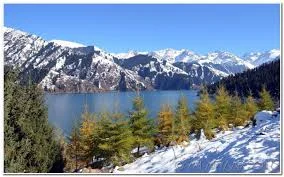
Harbin, Changchun, Shenyang, Jilin City, Jinzhou, Urumqi, Shihezi and Yinchuan have long winters with temperatures well below freezing for months. The air is often dry, and buildings are heated indoors, so life inside is warm. Summers are short and pleasant to hot. Students from tropical countries need proper winter clothing and a few weeks to adjust. The reward is clear skies, low humidity and, in many of these cities, lower living costs.
Urumqi belongs here. It has a dry continental climate, with a cold snowy winter and a hot dry summer. Our Life in Urumqi guide explains clothing, hostel heating and the first-month routine.
Beijing, Tianjin, Dalian, Jinan, Qingdao, Shijiazhuang, Xi'an, Zhengzhou and Xuzhou have a real winter with frost and some snow, but it is shorter and less severe than in Group A. Summers are hot, and the main rains fall in July and August. Coastal Dalian and Qingdao are cooler in summer and have more sea breeze. Spring in the north can be dusty, and air quality varies by season.
Shanghai, Nanjing, Hangzhou, Suzhou, Wuhan, Hefei, Chengdu, Chongqing and neighbouring cities have winters that are cool and damp rather than freezing, with indoor heating less common than in the north, and summers that are hot, humid and long. Several of these cities have a reputation for rainy, grey weather in winter. If you dislike humidity, check the July figures carefully.
Guangzhou, Shantou, Xiamen, Fuzhou and Nanning have the warmest winters on the list. You can wear light jackets in January. The trade-off is long hot and humid summers, and a typhoon season on the coast between roughly July and September. For students from South Asia or Africa, this is the group whose weather feels most familiar.
Kunming sits on a high plateau, so the summers are comfortably cool and the winters are mild, with a lot of sunshine. It is often described as a spring-like city. It is also the only university from this group on the list.
| City | Climate group | January | July |
|---|---|---|---|
| Harbin | Very cold winters | about −18 | about 23 |
| Changchun | Very cold winters | about −14 | about 23 |
| Urumqi | Very cold winters | about −12 | about 24 |
| Shenyang | Very cold winters | about −11 | about 25 |
| Yinchuan | Very cold winters | about −7 | about 24 |
| Dalian | Cold winters, hot summers | about −4 | about 24 |
| Beijing | Cold winters, hot summers | about −3 | about 27 |
| Tianjin | Cold winters, hot summers | about −3 | about 27 |
| Xi'an | Cold winters, hot summers | about 0 | about 27 |
| Jinan | Cold winters, hot summers | about 0 | about 27 |
| Shanghai | Cool winters, hot humid summers | about 4 | about 29 |
| Wuhan | Cool winters, hot humid summers | about 4 | about 29 |
| Hangzhou | Cool winters, hot humid summers | about 4 | about 29 |
| Chengdu | Cool winters, hot humid summers | about 6 | about 26 |
| Chongqing | Cool winters, hot humid summers | about 8 | about 29 |
| Kunming | Mild all year | about 9 | about 20 |
| Xiamen | Mild winters, hot humid summers | about 13 | about 29 |
| Guangzhou | Mild winters, hot humid summers | about 14 | about 29 |
Rounded long-term monthly averages, for pattern only. Check a current forecast before you pack.
Tuition is only part of the cost of studying medicine in China. Food, local transport, a phone plan, clothes, travel home and small emergencies add up over six years, and they depend on the city more than on the university. Published student cost guides generally place Beijing and Shanghai at the top, with typical monthly living costs of around ¥3,500 to ¥5,500 for an international student, and smaller cities lower. Those guides are written by agencies and are not official, so treat them as a pattern, not a quote.
A useful way to think about it is three tiers. The first tier is the large coastal and capital cities, Beijing, Shanghai, Guangzhou and similar: highest rents and restaurant prices, most choice, and most international food. The second tier is large regional capitals such as Wuhan, Chengdu, Xi'an, Hangzhou, Nanjing, Chongqing, Shenyang and Changchun: moderate costs with the services of a big city. The third tier is smaller cities and regional centres: the lowest costs, a quieter life and fewer international restaurants.
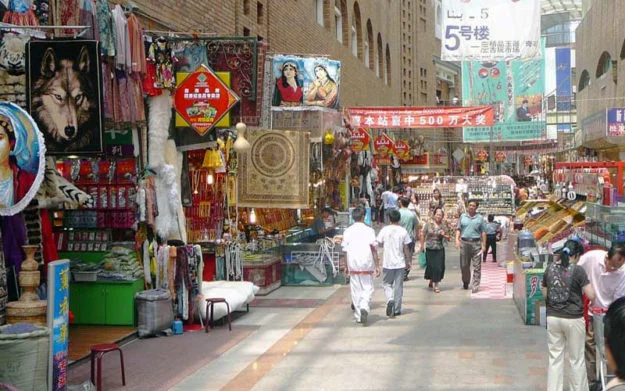
At XJMU, our published budget for food is USD 150 to 250 a month, with local transport at USD 10 to 20 and a mobile SIM at USD 10 to 15. Hostel accommodation is part of the fee, at ¥4,500 a year after the first year. That is the figure we can verify. For any other university, ask for a similar line-by-line budget from a current student, not only from the admissions office.
| Item | Typical monthly cost |
|---|---|
| Food | USD 150–250 |
| Local transport | USD 10–20 |
| Mobile SIM | USD 10–15 |
Published tuition for English taught MBBS in China varies a great deal between universities. Public listings put it anywhere from about ¥21,000 to about ¥48,000 a year, and you will see both lower and higher figures quoted. Those listings come from agencies and are often years out of date, so we do not copy them here. Use them only to understand that the range is wide, then ask each university for its current figure.
A tuition number is only comparable when you know what sits behind it. Two universities can show the same tuition and cost very different amounts once accommodation, insurance, the residence permit and the medical examination are added. Some universities bundle these into a first-year package. Others charge them separately each year. Before you compare, put every university on the same footing: the first-year total and the yearly total after that.
For XJMU, the September 2026 first-year package is ¥49,950, about USD 7,000, and it includes application processing, tuition, hostel accommodation, the student visa, health insurance and medical, the JW202 visa letter and airport pickup. From the second year the total is ¥35,950 a year, about USD 5,050. Over six years, the total comes to about ¥229,700, which is about USD 32,000. The full breakdown is in our MBBS in China fees guide.

Build one row per university and fill each column from the university's own current notice or from written answers. Leave a cell blank if you do not have a figure: a blank is more honest than a guess.
| What the first-year package covers | Status |
|---|---|
| Application processing, registration and admission charges | Included |
| Tuition fee | Included |
| Hostel accommodation | Included |
| Student visa, health insurance and medical | Included |
| JW202 visa letter and airport pickup | Included |
| Total: ¥49,950 (about USD 7,000) |
Year 1 includes application processing, visa, insurance and medical. Living costs and flights are extra.
Distance matters because you will fly home for holidays, and sometimes in an emergency. China is vast, and the difference between the nearest and the furthest city is several hours in the air. Cities in the north-west are the closest to Pakistan, Central Asia and parts of the Middle East. Cities on the east coast are further, but have the busiest international airports and the most direct connections.
From Islamabad, Urumqi is about 2 hours 50 minutes by direct flight, which makes it one of the closest cities on the list for students from Pakistan. For a student from the Indian subcontinent, Africa or South-East Asia, a large coastal hub may be easier. When you compare, check three things: whether there is a direct flight to your home city, how often it flies, and what a return ticket usually costs. Over six years, a ticket you can afford twice a year is worth more than a university that looks good on paper.
Medical study is intense, so the quality of daily life matters. The three things students mention most are food, community and the campus itself.
Halal food is easy to find in Xinjiang and Ningxia, where many people are Muslim, and in some historic Muslim districts in other cities. In large cities there are halal restaurants and shops, but you may need to travel to reach them. In smaller cities without a large Muslim population, you may rely on the canteen, on cooking in your hostel, or on a small number of restaurants. Ask each university what the canteen offers and where students buy halal meat.
A student from a small community often gets the most support from seniors from their own country. Before you commit, ask how many international students are in the university, how many come from your country, and whether there is a student association that helps new arrivals. A friendly senior who meets you at the airport removes a lot of stress in the first week.
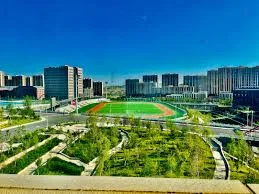
Look at how many students share a hostel room, whether there is heating in winter and air conditioning in summer, how the canteen works, and how far the hostel is from classrooms and the teaching hospital. A short, safe walk between hostel, class and hospital saves time every day for six years.
The second half of an MBBS is learned at patients' bedsides, so the teaching hospitals matter as much as the lecture halls. When you compare universities, ask which hospitals take international students, how big they are, and how rotations are arranged. A programme with a large affiliated hospital and clear rotation rules is better than a famous name with vague arrangements.
Every university on the list teaches the medical subjects in English, but patients speak Chinese, so clinical years rely on Chinese. That includes XJMU, where introductory Chinese is taught in years 1 and 2 and HSK-4 is required by graduation. Ask any university you compare how much Chinese is taught, who supports you on the wards, and what happens if you struggle with the language.
On this point, some published figures need a careful check. Our own site and the official brochure do not yet agree on every number for teaching hospitals and internship hospitals, and we are waiting for the university to confirm the current ones. We would rather tell you that than print a figure we cannot stand behind.
How English taught MBBS works in ChinaPick two or three universities that are on the MOE list and that survive your first filter on budget and climate. Score each one from 1 to 5 on the factors below. Give each factor a weight from 1 to 3 based on how much it matters to you, multiply, and add up. The point is not the final number. It is that writing down your own weights stops you from being steered by whichever consultant speaks most confidently.

| Factor | Weight (1 to 3) | University A | University B | University C |
|---|---|---|---|---|
| On the MOE list and programme confirmed | 3 | |||
| Total six-year cost | 3 | |||
| Climate you can live with | 2 | |||
| Distance and flights home | 2 | |||
| Halal food and community | 2 | |||
| Teaching hospitals and rotations | 3 | |||
| Scholarship chances | 1 | |||
| Total |
These profiles are not recommendations of a particular university. They show how the same facts lead different students to different groups of cities.
Looks at the six-year total first, then at the city. A third-tier city with a low cost of living and bundled fees often wins. Ask about everything the fee does not include.
Dislikes cold. Group D and Kunming are the most comfortable, and Group C is workable if humidity does not bother you. This student should avoid a cold-winter city unless they are prepared to buy winter clothing and adjust.
Chooses by flight time. For students from Pakistan, a city in the north-west is the nearest. For students from elsewhere, a city with an international airport and a direct flight to home usually wins.
Looks first at Xinjiang and Ningxia, where halal food is part of everyday life, and then checks what the canteen and nearby restaurants offer in any other city.
Accepts higher costs for the chance to live in Beijing, Shanghai or Guangzhou. This student should budget more and check whether the hostel is on or near campus.
XJMU is on the MOE list at number 8, with 60 places for international students. It sits in Group A, so winters are cold and summers are hot and dry. Its strengths on the factors above are a published and bundled fee, a first-year package of ¥49,950 and ¥35,950 a year after that, hostel accommodation included in the fee, easy access to halal food, and a short direct flight from Islamabad.
Its trade-offs are equally clear. The winter is long and cold, Urumqi is far from the Chinese coast, and the city is smaller and quieter than the first-tier cities. A student who wants a global metropolis, or who cannot live with a northern winter, may be better served elsewhere. We would rather you chose the right city than the wrong one.
If you want to see what a normal week looks like, read our Life in Urumqi guide, and check the admissions calendar below for the next intake.
| Step | September/Fall intake (September) | March/Spring intake (February/March) |
|---|---|---|
| Applications open | 1 March | 1 September |
| Early deadline (recommended for scholarships) | 30 June | 15 December |
| Regular deadline | 15 August | 15 January |
| Registration and orientation | 10 September | 20 February |
Send the same questions to every university and agent on your shortlist, and keep the answers in writing. If a university cannot answer a question clearly, treat that as information.
Most regrets come from a short list of avoidable mistakes.
Make a short list of two or three universities from the MOE list, fill in the scorecard with your own weights, and send each university the same written questions. Read the guide for your country if you want the home-licensing context, and check the fees and scholarship guides if budget is the deciding factor. If Urumqi is on your list, our admissions team will answer your questions in writing so you can compare our answers with those of other universities.
Read the scholarship guideThe 43 universities that China's Ministry of Education has approved to teach MBBS in English to international students, with seat quotas, the rules behind the list and how to check any university yourself.
A clear breakdown of what an MBBS in China costs at Xinjiang Medical University, an MOE listed university: the first-year package, the yearly fees after that, the payments you make before you travel, everyday living costs and a six-year total you can check yourself.
What daily life is like for an MBBS student in Urumqi: the city and its climate, the hostel, halal food, monthly costs, transport, phones and money, clothing for each season, and a first-month plan for new arrivals and their parents.
Talk to our admissions counsellors for free guidance, or start your application online.