It can be a good choice for the right student at an approved university, and a poor one for others. This guide sets out what is strong, what is hard, and how to check each claim before you commit six years.
It depends on three things: which university you choose, what you want from the degree, and what your home country requires of its doctors. Studying at a university approved by China's Ministry of Education, with a real clinical programme and a budget you can sustain, is a sound option for many students. Studying at a university that is not approved, or on a promise nobody can document, is not.
We are the admissions office of Xinjiang Medical University (XJMU) in Urumqi, so we have an interest in the answer. For that reason we try to be specific and to say where China is the harder route. If you read to the end, you should know what to verify before you spend money.
The rest of this guide takes the usual worries in turn: approval, quality, cost, language, clinical training, licensing at home, safety and daily life.
| Question | Short answer |
|---|---|
| Is it approved? | Yes, at the 43 universities on the Ministry of Education list for 2026–2027 |
| Is it taught in English? | The medical subjects are; Chinese is needed for clinical work |
| How long is it? | 6 years including a 1-year internship |
| Is it affordable? | XJMU: ¥49,950 first year, then ¥35,950 a year |
| Is it valid at home? | Your national regulator decides; check its current rules |
| Who is it right for? | Students who can live abroad, learn Chinese and plan for the licensing exam |
The strongest sign of legitimacy is the official list. On 1 June 2026 the Ministry of Education (MOE) of the People's Republic of China issued notice 教外司来〔2026〕94号, listing 43 universities allowed to teach the English taught MBBS to international students in 2026–2027, with 2,790 places. XJMU is number 8, with 60 places.
This is the first test any university must pass. If a university is not on the list, do not enrol on the strength of a brochure. If it is on the list, you still need to check that the programme you are offered is the English taught MBBS, and that the fees and deadlines on the university's own admissions page match what the agent tells you.
Approval in China is not the same as recognition in your home country. That is a separate question, and we return to it below.
See the full MOE list of 43 universitiesStudents who choose China usually point to a handful of real advantages.

You can check a university in a minute against the MOE notice, instead of relying on word of mouth.
The programme is five years of study and a one-year internship, with a clear structure that includes pre-clinical and clinical stages.
Chinese teaching hospitals are large, and clinical training takes place in real wards. At XJMU the First Affiliated Hospital is a Class A tertiary hospital, the highest grade in the Chinese system.
At XJMU the first-year package is ¥49,950, about USD 7,000, and later years are ¥35,950 a year, about USD 5,050. The package includes tuition, hostel, visa, insurance and medical, so there are fewer surprises.
The Chinese Government Scholarship and the Xinjiang Government Scholarship are available for eligible students, with published stipends.
Large numbers of international students from South Asia, Africa and the Middle East study in China, so there is usually a community of seniors who can help.
A fair answer includes the difficult parts. Most of the regrets we hear come from students who did not expect these.
Lectures are in English, but patients speak Chinese. Introductory Chinese is taught in years 1 and 2, and at XJMU HSK-4 is required by graduation. Chinese takes sustained effort.
You will be far from family for long periods. Plan how you will stay in touch, and budget for flights home.
Winters in northern cities are long and cold. Food, social habits and the pace of life differ from home. Most students adapt, but it takes weeks.
Graduates of foreign medical schools usually have to pass a licensing examination at home. That requires preparation on top of the degree.
Some agents promise guaranteed outcomes or quote fees that do not match the university's own notice. Always check against the official source.
Quality varies between universities, as it does in every country. The approval list is a floor, not a ranking, so two approved universities can differ in the size of their hospitals, the experience of their teachers, and how they support international students.
To judge quality, look at four things. The first is the teaching hospital: its size, its grade and how many students share its wards. The second is the curriculum: how much time is clinical and how it is sequenced. The third is the English support: whether lecturers teach well in English and whether study material is clear. The fourth is the outcome: what graduates say about their experience and what the university can show about its graduates.
Be careful with ranking tables and star ratings. Many are paid for or built from different criteria, and they rarely tell you what daily study feels like. Speak to current students instead.
| Check | What to look for |
|---|---|
| Teaching hospital | Size, grade, rotation arrangement for international students |
| Curriculum | Years of clinical teaching, internship arrangement |
| English teaching | Lecturer fluency, materials, student feedback |
| Student support | Airport pickup, language help, hostel, counselling |
| Graduates | What current students and graduates say, in writing |
For many families the main attraction is cost, and a fixed, published package is easier to plan around than uncertain extras. At XJMU, the first-year package for September 2026 covers application processing, tuition, hostel accommodation, the student visa, health insurance and medical, the JW202 visa letter and airport pickup, for ¥49,950, about USD 7,000.
From the second year, the cost is ¥35,950 a year, about USD 5,050: tuition ¥30,000, accommodation ¥4,500, insurance ¥300, residence permit ¥800 and physical examination ¥350. Over six years the programme totals about ¥229,700, or about USD 32,000. On top of this come your living costs, which at XJMU we estimate at USD 150 to 250 a month for food, USD 10 to 20 for local transport and USD 10 to 15 for a mobile SIM, plus flights home.
Good value is not the lowest number. It is a number you can verify, covering what you need, over a degree that leads where you want to go. Compare totals, not headlines, and ask for everything in writing.
| Item | Amount (RMB ¥) |
|---|---|
| Tuition fee | ¥30,000 |
| Accommodation | ¥4,500 |
| Insurance | ¥300 |
| Residence permit | ¥800 |
| Physical examination | ¥350 |
| Total per year: ¥35,950 (about USD 5,050) |
This is the question that matters most after approval, and the one where rumours spread fastest. The honest answer is that your national medical regulator decides, and its rules change. Graduates of foreign medical schools in most countries have to pass a licensing examination and meet other conditions before they can practise.
Before you enrol, read your regulator's current published rules. Check whether it recognises graduates of the university you choose, how long the degree must be, whether an internship is required and where it is done, and which examination graduates must pass. Keep a dated copy of what you read.
Do not rely on pass rates quoted by agents. Ask where the figure comes from, what year it covers, and who was counted. Our country guides explain what to check for Pakistan, India, Bangladesh, Nepal and Sri Lanka.
Yes. The medical subjects are taught in English, but patients speak Chinese, so you need it for clinical years. Introductory Chinese is taught in years 1 and 2, and at XJMU HSK-4 is required by graduation.
Treat this as a real study load. Students who practise a little every day, speak with patients and seniors, and use the language outside class do much better than those who leave it until the clinical years. Ask the university how Chinese is taught, who supports you on the wards, and what happens if you find it difficult.
Students generally describe daily life in Chinese university cities as orderly and practical, with good public transport, widely available food and a campus-centred routine. Hostels are on or near campus, and the university arranges visa, insurance and medical checks for you.
Safety and comfort still depend on the city, the hostel and your own habits, so ask the university about the hostel, security and emergency arrangements, and speak to students who live there. Food, climate and community differ by city, so read about the one you are considering. Our Life in Urumqi guide shows what daily life is like in the city where XJMU is.
Online forums repeat the same claims, some true and some not. Here are the ones we hear most, with what the published facts say.
| Claim you may hear | What to check |
|---|---|
| All Chinese medical universities are approved | No. Only the 43 on the 2026–2027 MOE list are approved for the English taught MBBS |
| Everything is taught in English, so Chinese is not needed | Lectures are in English, but clinical work with patients needs Chinese. HSK-4 is required by graduation at XJMU |
| The fee is only the tuition | Check what is included. At XJMU the first-year package includes tuition, hostel, visa, insurance and medical |
| Admission is guaranteed if you pay | Admission follows the published requirements and documents. Be wary of guarantees |
| Every country accepts the degree the same way | Each national regulator sets its own rules, and they change |
| The cheapest university is the best value | Compare six-year totals, climate, hospitals and what the fee covers |
Knowing the process helps you spot anything that does not fit. Admission follows a published sequence, and you should be able to match each step with something in writing.
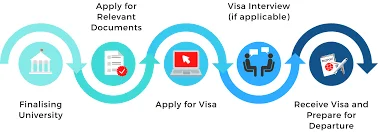
Prepare your passport, photograph, school transcripts and certificates, medical form and blood report, police certificate and self-introduction video, and send the application with the application fee of ¥1,000, which is included in the first-year package.
If you meet the requirements, the university issues a Pre-Admission Letter. After this, you pay a seat reservation deposit of ¥2,000, which is refunded if the JW202 is rejected.
The university issues the JW202 visa letter, which you take to the Chinese embassy or consulate to receive your student visa. Visa, insurance and medical of ¥1,450 a year are included in the package.
You travel to Urumqi, are met at the airport, and register at the start of the semester. Registration and orientation fall on 10 September for the September/Fall intake and about 20 February for the March/Spring intake.
A medical degree is the start of a career, and what comes next depends on where you want to practise. For most graduates the next step is the licensing examination of their home country, followed by the registration and training steps that country requires.
Some graduates choose to specialise or to work in another country. Each country has its own rules for graduates of foreign medical schools, and they change, so read the current requirements of the place you want to practise, not a rumour. We do not quote examination pass rates, because they are easy to misreport and vary by year and country.
A practical suggestion: in your first year, read your regulator's rules again, and plan your study so that the licensing examination is not a surprise in year six. Students who prepare steadily through the degree are usually in a stronger position than those who start at the end.
Keep your own file of documents too: transcripts, certificates, internship records and the university's letters. You will need them again when you register at home, and replacing a missing document from abroad takes far longer than keeping the original safe.
A short list helps you test your own situation.
XJMU is on the MOE list at number 8 with 60 places, with a published fee, hostel accommodation included, halal food that is easy to find in Urumqi, and a short direct flight from Islamabad. The trade-offs are a cold winter and a city far from the coast. The calendar below shows the published dates for both intakes.
| Step | September/Fall intake (September) | March/Spring intake (February/March) |
|---|---|---|
| Applications open | 1 March | 1 September |
| Early deadline (recommended for scholarships) | 30 June | 15 December |
| Regular deadline | 15 August | 15 January |
| Registration and orientation | 10 September | 20 February |
Before you pay any fee, go through this list and keep the answers.
For a student who chooses an approved university, plans the budget, accepts the language and distance, and checks the home-country rules, it can be a good route to a medical degree. For a student who skips those steps, it can be a costly mistake. The degree is not the risk. The risk is deciding without the facts.
If you want to talk it through, our admissions team will answer your questions in writing, so you can compare them with other universities. Ask us the hard questions too.
An honest comparison for Pakistani students and parents: how the two routes differ in entry, duration, language, cost, clinical training and licensing, what the real disadvantages of studying in China are, and how to decide with your own numbers.
There are 43 universities on the 2026–2027 Ministry of Education list. This guide shows how to compare them fairly: by city and climate, cost of living, fees, seats, distance from home and daily life, so you can choose with a scorecard instead of an advertisement.
A clear breakdown of what an MBBS in China costs at Xinjiang Medical University, an MOE listed university: the first-year package, the yearly fees after that, the payments you make before you travel, everyday living costs and a six-year total you can check yourself.
Talk to our admissions counsellors for free guidance, or start your application online.