Four countries are on most students' shortlists for MBBS abroad. This guide compares China with Russia, Georgia and Kyrgyzstan on approval, duration, language, climate, cost and licensing, and shows how to check each claim yourself.
China, Russia, Georgia and Kyrgyzstan are the four destinations that come up most often when families look for an MBBS abroad. Each has English-language programmes for international students, each has universities that welcome applicants from South Asia, Africa and the Middle East, and each is cheaper than private medical education in many home countries. Beyond that, they differ in ways that matter over six years.
This guide is written by the admissions office of Xinjiang Medical University (XJMU) in Urumqi, so we know China best, and we say so. We do not print fee tables for Russia, Georgia or Kyrgyzstan, because fees there change every year and are quoted differently by every agent, and we cannot verify them for you. Instead we give you the questions to ask, the official sources to check, and the points where the countries genuinely differ.
Throughout, we describe what is solid and what you should verify. A good decision about a six-year degree should not depend on a comparison table you cannot trace to a source.
| Factor | China | Russia, Georgia, Kyrgyzstan |
|---|---|---|
| Official approval of the programme | Ministry of Education list: 43 universities for 2026–2027 | Each country has its own list. Check the national authority and the university |
| Programme length | 6 years including a 1-year internship | Commonly 5 to 6 years, depending on country and university. Confirm in writing |
| Language of teaching | Medical subjects in English; Chinese needed for clinical work | English programmes exist; local language is needed with patients |
| Climate | Wide range from very cold north to mild south | Cold winters in Russia and Kyrgyzstan; Georgia is milder |
| Cost | XJMU: ¥49,950 first year, ¥35,950 a year after | Ask each university for first-year and yearly totals |
| Licensing at home | Home regulator's rules apply | Home regulator's rules apply |
Before you compare anything else, ask whether the university is allowed to teach international medical students, and whether your home regulator accepts its graduates. These are two different questions, and a lot of marketing blurs them.
In China, the answer to the first question is public. The Ministry of Education notice 教外司来〔2026〕94号, issued on 1 June 2026, lists 43 universities approved for the English taught MBBS in 2026–2027, with 2,790 places. XJMU is number 8, with 60 places. You can check any Chinese university against that list in a minute. Our MOE listed universities page prints the whole table.
In Russia, Georgia and Kyrgyzstan, each country keeps its own register of accredited universities and programmes. We recommend looking up the university on the official register of that country, not on an agent's page, and confirming that the specific English-medium programme is accredited, not only the university. Recognition for graduates can also vary between universities within the same country, so ask the university for its accreditation documents.
For the second question, your home regulator is the authority. Whether it is the medical council of Pakistan, India, Bangladesh, Nepal, Sri Lanka or another country, it publishes its rules, and they change. Read the current rules before you enrol and keep a dated copy. If a consultant tells you a university is recognised, ask where the regulator says so.
See the MOE list of 43 universitiesDuration affects cost directly: every extra year adds tuition, accommodation and living costs. In China, the MBBS runs for six years, which is five years of study and a one-year internship in hospitals. The internship is part of the degree, not an extra.
Programme lengths in other countries are usually described as five or six years, and the structure differs. Some programmes include an internship in the stated length, and some do not. Do not compare the headline number. Ask each university: how many years of study in total, how many of those are clinical, and whether any internship is required and where it takes place.
A longer degree can also be more relaxed, and a shorter one more compressed. What matters is that the clinical teaching is enough for you to practise safely and to pass the licensing examination at home.
| Question | Why it matters |
|---|---|
| Total years including internship | Sets the total cost and time before you can practise |
| Years of clinical teaching | Clinical exposure is what the licensing exam tests |
| Where the internship takes place | A home-country internship may have separate rules |
| Whether there are repeated-year fees | Failing a year can add a full year of cost |
All four countries offer English-medium MBBS programmes for international students. The medical subjects are taught in English, the textbooks are in English, and the exams are in English. But patients speak the local language, so every country expects you to learn some of it for clinical years.
In China, introductory Chinese is taught in years 1 and 2, and at XJMU HSK-4 is required by graduation. Chinese is a hard language for most beginners, so budget real study time for it. In Russia and Kyrgyzstan, Russian plays the same role. In Georgia, you will meet Georgian, and in many places Russian or English as well. Whichever country you choose, ask the university how much local language is taught, who helps you on the wards, and what the pass requirements are.
A student who enjoys learning languages may find this an advantage. A student who dreads it should treat it as a real cost and weigh it honestly.

Weather and distance shape how six years feel, so compare them before you compare small differences in fees.
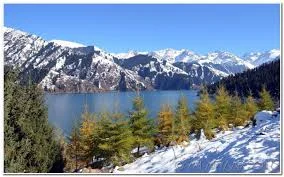
China is huge, so the climate depends on the city. The north-east and north-west have very cold winters, the Yangtze region has cool damp winters and hot humid summers, and the south coast is mild in winter. Kunming is mild all year. Our university comparison guide groups all 43 cities by climate. Urumqi, where XJMU is, has a dry continental climate with cold snowy winters and hot dry summers.
Most medical universities in Russia lie in regions with long cold winters, and many students describe the first winter as the hardest adjustment. Indoor heating is usually good, so the cold is mainly an outdoor challenge. Check the city, because Russia spans very different regions.
Georgia is generally milder, with warm summers and winters that vary between the coast and the mountains. Students who dislike deep cold often put Georgia high on the list. As in any country, check the specific city.
Kyrgyzstan is mountainous, with cold winters and warm summers, and the climate varies with altitude. The capital and the main student cities have a continental climate.
Cost is the reason many families look abroad, and it is also where comparisons go wrong. A headline tuition figure compares badly across countries because each university bundles different things. One includes hostel, insurance and visa. Another lists them separately. Exchange rates move, and currencies differ.
To compare fairly, ask each university for two numbers in writing: the first-year total and the yearly total from the second year, with a list of what each covers. Then convert them into one currency on the same day, and multiply out the full length of the degree. Add the cost of flights home and your own living costs in that city.
At XJMU, the first-year package for the September 2026 intake is ¥49,950, about USD 7,000, covering application processing, tuition, hostel accommodation, the student visa, health insurance and medical, the JW202 visa letter and airport pickup. From the second year, the total is ¥35,950 a year, about USD 5,050. That is about ¥229,700, or USD 32,000, over six years before personal living costs. We do not quote totals for other countries. Use the worksheet below to build your own from written quotes.
| What the first-year package covers | Status |
|---|---|
| Application processing, registration and admission charges | Included |
| Tuition fee | Included |
| Hostel accommodation | Included |
| Student visa, health insurance and medical | Included |
| JW202 visa letter and airport pickup | Included |
| Total: ¥49,950 (about USD 7,000) |
A medical degree from abroad does not by itself let you practise at home. Most countries require graduates of foreign medical schools to pass a licensing examination and meet other conditions set by the national regulator. This applies to graduates of China, Russia, Georgia and Kyrgyzstan alike.
Because rules differ by country and change over time, this is the one point where you should rely only on your own regulator's current publications. Do not rely on a pass rate from an agent, which may be from a different year, a different group or a different country. Ask what the rules say on university recognition, on the length of the degree, on any required internship, and on the examination that graduates must take.
Our country guides for Pakistani, Indian, Bangladeshi and Nepali students describe the questions to ask and tell you where to check the current rules.
MBBS in China for Pakistani studentsWhat you see on the wards matters more than the brochure. Ask every university which teaching hospitals international students use, how big the hospitals are, how many patients you will meet, and how rotations are organised. In China, a Class A tertiary hospital is the highest grade in the Chinese hospital system, and XJMU\'s First Affiliated Hospital is of this grade.
Visit if you can, or ask for a video call with a current student from your country. Ask them what a normal day on the wards looks like, how much hands-on work they do and how the staff handle language.

Entry rules differ between countries, and between universities in the same country. Some ask for an entrance test or an interview, and some admit on school results alone. Ask each university what it requires, and keep the answer in writing so you can compare like with like.
At XJMU the published requirements are a senior high-school certificate with science subjects, a minimum of 60% in each science subject, an age between 18 and 35, good health free from communicable diseases, and a valid passport. The documents include a Chinese physical examination form and blood report, a police non-criminal record certificate, school transcripts and certificates, and a short self-introduction video.
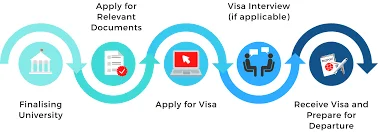
Visas are a second filter. In China, the university issues a JW202 visa letter, which you take to the Chinese embassy or consulate to receive your student visa. Ask every university in every country who issues the invitation, how long it takes, what it costs and what happens if the visa is refused. At XJMU the seat reservation deposit of ¥2,000 is refunded if the JW202 is rejected. Ask other universities for the same promise in writing.
Medical study is demanding, so your surroundings matter. Think about safety, food, healthcare for yourself, and how easy it is to find a community of students from your own country.
For food, ask whether halal meals are easy to find in the specific city. In Urumqi they are part of everyday life. For healthcare, check that your insurance is included and how you reach a doctor in an emergency. At XJMU, visa, insurance and medical costs of ¥1,450 a year are included in the package. For community, ask how many students from your country are already enrolled and whether seniors meet new arrivals at the airport.
Finally, ask about the first month. A university that has a clear plan for arrival, registration, medical checks, SIM cards and orientation removes a lot of stress. Our Life in Urumqi guide shows what a well-organised first month looks like.
Read the Life in Urumqi guideThese are patterns, not rules. Use them to decide what to investigate.
China's MOE list is public, with named universities and seat numbers. That makes the first filter easy.
Look at warm cities in China, and at Georgia, and check the climate of the exact city in every country.
All four countries need some local language. Chinese, Russian and Georgian are each demanding, so test your patience honestly.
Compare totals, not tuition. Include flights, living costs and any repeated-year risk.
Urumqi is about 2 hours 50 minutes by direct flight from Islamabad, which helps students from Pakistan and Central Asia.
XJMU is on the MOE list at number 8 with 60 places for international students. Its fee is bundled and published, hostel accommodation is included in the fees, halal food is widely available in Urumqi, and the flight from Islamabad is short. Its trade-offs are a cold winter, a city far from the Chinese coast, and the need to learn Chinese for clinical work. If those fit you, it is worth a closer look. If they do not, another city or country may suit you better. We would rather you made the right choice than a quick one.
The calendar below shows the published dates for both intakes.
| Step | September/Fall intake (September) | March/Spring intake (February/March) |
|---|---|---|
| Applications open | 1 March | 1 September |
| Early deadline (recommended for scholarships) | 30 June | 15 December |
| Regular deadline | 15 August | 15 January |
| Registration and orientation | 10 September | 20 February |
Use this list for any pair of countries or universities. Keep the answers in writing.
These mistakes are common and avoidable.
There are 43 universities on the 2026–2027 Ministry of Education list. This guide shows how to compare them fairly: by city and climate, cost of living, fees, seats, distance from home and daily life, so you can choose with a scorecard instead of an advertisement.
An honest comparison for Pakistani students and parents: how the two routes differ in entry, duration, language, cost, clinical training and licensing, what the real disadvantages of studying in China are, and how to decide with your own numbers.
How an English taught MBBS works at an MOE listed university: who is allowed to teach it, what you study each year, how much Chinese you need, and what it costs at Xinjiang Medical University.
Talk to our admissions counsellors for free guidance, or start your application online.