A step-by-step guide to the China student visa for MBBS students: from the Pre-Admission Letter and JW202 form to the X1 visa application in your home country, the residence permit after arrival and the yearly renewal. Visa rules are quoted from official embassy pages, with the date we checked them.
To get a China student visa for MBBS, first secure admission. Xinjiang Medical University issues a Pre-Admission Letter, then, after the seat deposit, the admission letter and JW202 form. Apply with them for an X1 visa at the Chinese embassy or visa centre serving your home address, travel, and apply for a residence permit within 30 days of entry.
| Visa type | X1 (study in China for more than 180 days) |
|---|---|
| Papers from the university | Admission letter and JW202 form |
| Before the JW202 | Pre-Admission Letter, then ¥2,000 seat deposit (refunded if the JW202 is rejected) |
| Where to apply | Chinese embassy, consulate or visa application centre serving your home address |
| After arrival | Apply for a residence permit within 30 days of entry |
| Yearly renewal | Residence permit ¥800 and physical examination ¥350 a year from year two |
| First-year package | ¥49,950, includes student visa, health insurance and medical, JW202 and airport pickup |
| Intakes | March/Spring and September/Fall |
An MBBS in China lasts six years, so an international student needs the long-term study visa, called the X1 visa. You cannot apply for it on your own initiative. The embassy asks for two papers that only your university can provide: the admission letter and the JW202 form. The visa process therefore starts with admission, not with the embassy.
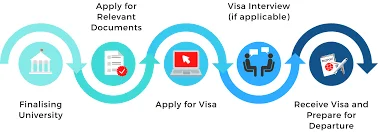
At Xinjiang Medical University (XJMU) in Urumqi the order is fixed. You apply online and pay the ¥1,000 application fee. If your file passes review you receive a Pre-Admission Letter and pay the ¥2,000 seat reservation deposit. The university then issues the admission letter and the JW202 visa letter. With those two papers you apply for the X1 visa in your home country, travel to Urumqi, and convert the visa into a residence permit after you arrive.
This guide explains each step in plain language. Where we state a visa rule as fact, we name the official page it comes from and the month we checked it. Where a rule differs from country to country, such as the visa fee, we say so and do not give a number. No university, agent or website can promise that a visa will be issued. The consular officer decides.
| Question | Answer |
|---|---|
| Which visa does an MBBS student need? | X1, the visa for study in China of more than 180 days |
| What does the university send you? | Admission letter and JW202 form, after the Pre-Admission Letter and seat deposit |
| Where do you apply? | At the Chinese embassy, consulate or Chinese Visa Application Service Center that serves the place where you live |
| What happens after arrival? | The X1 visa is converted into a residence permit; the application must be made within 30 days of entry |
| How often is the permit renewed? | Each year; XJMU lists ¥800 for the residence permit and ¥350 for the physical examination from year two |
| Is the visa included in the fees? | The first-year package of ¥49,950 includes the student visa, health insurance and medical, the JW202 visa letter and airport pickup |
| Is approval guaranteed? | No. The consular officer decides on every application |
China has two study visas. According to the visa instructions published by the Chinese Embassy in Sweden (page dated 12 October 2026, checked November 2026), the X1 visa is issued to people who intend to study in China for more than 180 days, and the X2 visa to people who intend to study for no more than 180 days. The Chinese Embassy in Pakistan describes the two categories in the same way.
An MBBS student is always an X1 applicant, because the programme runs for six years. The X2 visa is meant for short courses, exchange terms and summer schools. It is not a cheaper or faster route into a degree, and you should be careful with anyone who suggests entering on a different visa and changing it later.
Embassy pages mention two forms, JW201 and JW202. Both carry the same title, Visa Application for Study in China. XJMU's published admission process names the JW202, which is the form this guide refers to throughout. You do not choose between the two forms. The university issues the one that applies to you.
The X1 visa lets you enter China to study. It is not your permission to stay for six years. That permission is the residence permit, which you apply for after arrival. Many families miss this point, so it has its own section below.
| X1 visa | X2 visa | |
|---|---|---|
| Purpose | Long-term study | Short-term study |
| Length of study | More than 180 days | 180 days or less |
| Typical user | Degree students, including MBBS | Short courses and exchange terms |
| Main papers from the school | Admission letter and JW201 or JW202 form | Admission notice from the school |
| After arrival | Must apply for a residence permit within 30 days of entry | Stay is limited to the period written on the visa |
The visa file is only as strong as the admission file behind it. The documents XJMU asks for at the application stage are listed below. Several of them, such as the passport and the physical examination form, are used again at the embassy and after arrival, so prepare them carefully once and keep the originals safe.

You apply online, upload your documents and pay the ¥1,000 application fee. The fee is non-refundable once the Pre-Admission Letter is issued, and it is included in the first-year package.
If the file passes the first review, the university issues a Pre-Admission Letter. You then pay the ¥2,000 seat reservation deposit. The deposit is refunded if the JW202 visa letter is rejected. Ask admissions to confirm that in writing with the payment instructions.
After review, which takes two to four weeks, the university issues the admission letter and the JW202 form. Check both the day they arrive. Your name, date of birth, nationality and passport number must match your passport exactly, letter for letter. If anything is wrong, ask the admissions office for a correction before you go near the embassy. A mismatch is far easier to fix at this point than after an application has been submitted.
Your admission papers are prepared with the passport details you applied with. If you plan to renew your passport, do it before you apply for admission. If you must renew it afterwards, tell the admissions office immediately, because the papers may need to be issued again.
How to apply to XJMU, step by stepThe table sets out the whole path, from the online application to the residence permit. The middle column shows who is responsible for each step, because a large part of the process is done by the university and not by you.
| Step | Who does it | What you need |
|---|---|---|
| 1. Apply online to XJMU | You | The application documents listed above and the ¥1,000 application fee |
| 2. Pre-Admission Letter | University | A complete file that passes the first review |
| 3. Seat reservation deposit | You | ¥2,000, paid as the admissions office instructs; keep the receipt |
| 4. Admission letter and JW202 form | University | Two to four weeks after review; check every detail against your passport |
| 5. Online visa application form | You | Passport, digital photograph, admission letter, JW202 and the other papers your embassy lists |
| 6. Submit passport and originals | You | An appointment or visit to the embassy, consulate or visa centre for your area, and the visa fee |
| 7. Decision on the visa | Consular officer | Patience, and a quick reply if more documents or an interview are requested |
| 8. Book the flight and travel | You | Passport with the X1 visa, admission letter, JW202, medical records and photographs in hand luggage |
| 9. Registration and health check | You and the international student office | Your original documents; airport pickup is included in the first-year package |
| 10. Residence permit | You, with the international student office | An application within 30 days of entry |
| 11. Yearly renewal | You, with the international student office | Residence permit fee ¥800 and physical examination ¥350 a year from year two |
You apply for the X1 visa in the country where you live, at the Chinese embassy or consulate that covers your home address. In many countries the embassy does not receive the papers itself. A Chinese Visa Application Service Center, or another appointed centre, accepts the passport and documents, collects the fee and returns the passport. The decision is still made by the consular officer, not by the centre.
The general pattern is the same almost everywhere. According to the Chinese Embassy in Sweden (page dated 12 October 2026, checked November 2026), applicants complete the online application form before they submit, and present a passport with at least six months of remaining validity and blank visa pages, a recent passport photograph with a white background, the admission letter and the JW201 or JW202 form. That page asks for the original and a photocopy of both study papers. Other embassies ask for a printout or a photocopy only, which is why you must read the page for your own country and not a general list, including this one.
If you live outside your country of citizenship, expect to show proof that you are staying legally in the country where you apply. Embassy pages list this as a standard requirement.

Find the website of the Chinese embassy in your country and follow its link to the visa pages. Look for the date on the instruction page, because embassies update these pages and older copies remain in search results. Do not fill in a visa form on a third-party website that only looks official.
The details on the online form must be the same as in your passport. Give your real education and family details, and name XJMU as the school exactly as it appears on the admission letter. An honest, consistent form is the best thing you can do for your application.
Visa fees differ by nationality, by country and by the number of entries, and they change. We do not print a fee here. Check the fee table of your own embassy or visa centre in the week you apply. Processing times also differ, and they become longer when the officer asks for more documents.
Many XJMU applicants apply from Pakistan, so we read the Chinese Embassy in Pakistan's own page, Instruction for Chinese Visa Application, dated 28 April 2025, and the matching page of the Consulate General in Karachi, dated 11 June 2025. Everything in this section comes from those two pages as we found them in November 2026. They may be updated at any time, so read the current version before you apply.
According to the embassy page, an X1 applicant in Pakistan submits a printout of the Confirmation Form for Study in China (Form JW201 or JW202) and a photocopy of the admission letter from the university, together with the common documents: a passport valid for more than six months with at least one blank visa page, a copy of its information page, a recent digital photograph with a white background, and the online application form with details that match the passport exactly.
Applicants submit at Gerry's centre in Islamabad, Karachi or Lahore, according to where they permanently live. The embassy in Islamabad covers Islamabad, Rawalpindi, Khyber Pakhtunkhwa and Gilgit-Baltistan and, at the date of that page, also handled applicants from Punjab. The consulate in Karachi covers Sindh and Balochistan. Fingerprints are collected at the centre, with some exemptions listed on the page.
The embassy page says it generally needs four working days to process an application and does not offer a fast service. It adds that processing takes longer when documents must be added or an interview is held. Treat four working days as the embassy's general statement, not a promise, and do not plan your flight around it. The page we read does not list visa fees.
The Karachi consulate page lists a valid police character certificate, attested as it describes, among the common documents. You already need a police non-criminal record certificate for your XJMU application, so ask for it early and check on the page for your district exactly how it must be attested.
The Islamabad and Karachi pages are similar but not identical. Follow the page of the office that covers your permanent address, and use the online application system which that page names.
MBBS in China for Pakistani studentsThis is the question on which websites disagree most. Competitor and agent sites quote very different bank-statement amounts for a China student visa, often with no source and no country. We will not repeat their numbers. A financial requirement is set by each embassy for the applicants it serves, so the only figure that counts is the one on your own embassy's page.
For Pakistan we can quote the official wording. According to the Chinese Embassy in Pakistan (instruction page dated 28 April 2025, checked November 2026), an X1 applicant provides evidence of a scholarship or proof of financial resources amounting to US$2,500 per academic year, or the equivalent in Pakistani rupees. The same page says that the closing balance of the financial supporter's bank statement should be enough to cover the student's whole period of study in China. The Karachi consulate page uses the same wording.
Notice that the page does not print one total figure in rupees. If you are unsure how the officer will read "the whole period of study" for a six-year programme, ask the visa centre before you submit, and bring evidence that is clear and genuine. For every other country we have not confirmed a figure, so we give none. Some embassy pages we read do not mention a bank statement for students at all, while still allowing the officer to ask for further proof.
Use a real statement from the person who will pay your fees, with that person's name on it and a clear link to you, such as a parent. Money that appears in an account a few days before the application invites questions. Never use a borrowed or altered statement. A false document can lead to a refusal and can affect later applications.
An embassy's minimum is not the cost of the degree. XJMU's published fees are ¥49,950 for the first-year package and about ¥35,950 for each later year, before food, flights and personal spending. Plan your family budget on those figures.
See the full MBBS fee breakdownThe Foreigner Physical Examination Form is the standard Chinese health form for people who come to stay for a long period. A doctor completes it after a general examination, and laboratory and other reports are attached. XJMU asks for the Chinese physical examination form and blood report as part of the application file, which is why it appears in the documents list above.
Whether the embassy also wants to see the form with the visa application depends on the country. The embassy pages we read for this guide do not list it among the X1 documents, but each officer may ask for further papers. Check your own embassy's list, and carry the original form and the original reports to China in any case.
After arrival, new students go through a health check as part of registration, arranged with the international student office. In general, a foreigner who applies for a residence permit is asked for a health record accepted by the local authorities. If the papers you bring are incomplete or not accepted, expect to repeat part of the examination in Urumqi. The first-year package includes the medical item, and from the second year XJMU lists the yearly physical examination at ¥350.
Have the examination done at a recognised hospital. Make sure every box is completed, your photograph is attached and stamped where the form asks for it, and the doctor's signature and the hospital stamp are present. Keep the original laboratory reports and any X-ray report with the form.
Health papers are normally accepted only for a limited period after the date of issue. Do not have the examination done many months before you travel. If your admission is delayed and the form is getting old, ask the admissions office whether it needs to be repeated.
When the passport comes back, read the visa sticker before you leave the counter. Check your name, passport number and the visa category, which should be X1, and note the date by which you must enter China. If something is wrong, raise it at once.
Book the flight only after the visa is in your passport. The Chinese Visa Application Service Center in The Hague, for example, advises applicants not to pay for tickets before the decision, and the advice is sound everywhere. Plan to arrive in time for registration and orientation, which the published calendar puts at 10 September for the September/Fall intake and 20 February for the March/Spring intake.
Carry your papers in hand luggage: passport, admission letter, JW202, the physical examination form with its reports, passport photographs and your fee receipts. Airport pickup is included in the first-year package, so send your flight details to the admissions office before you fly.
| Step | September/Fall intake (September) | March/Spring intake (February/March) |
|---|---|---|
| Applications open | 1 March | 1 September |
| Early deadline (recommended for scholarships) | 30 June | 15 December |
| Regular deadline | 15 August | 15 January |
| Registration and orientation | 10 September | 20 February |
The X1 visa is an entry document. According to the Chinese Embassy in Sweden (page dated 12 October 2026, checked November 2026), holders of an X1 visa must, within 30 days from the date of entry, apply for a residence permit at the exit and entry administration of the public security authority in the place where they will live. The Chinese Visa Application Service Center in The Hague states the same rule. For an XJMU student, that place is Urumqi.
You do not do this alone. The international student office at XJMU helps new students with registration, the health check and the residence permit application. Your part is to arrive on time, hand over the documents the office asks for and attend any appointment in person.
The 30 days are counted from the day you enter China, not from the day classes begin. A student who arrives early and waits for the semester to start can lose a large part of the period without noticing. Report to the international student office as soon as you arrive.
In general terms: your passport with the X1 visa, photographs, the admission letter and JW202, proof of where you live, the health record and a letter from the university. The exact list is set by the local exit and entry office and can change, so follow the list the international student office gives you in the week you arrive.
Your passport stays with the authorities while the permit is prepared. Do not plan travel that needs your passport during the first weeks, and keep the receipt you are given until the passport is returned.
Before you book a trip home in the holidays, check the expiry date of your residence permit and ask the international student office whether it allows you to return. The Chinese Embassy in Pakistan's page describes extra papers, including a formal letter from the university, for students who are outside China when their study residence permit expires and who must apply again.
The residence permit for study is renewed during your studies, and at XJMU the cost appears in the yearly fee table: ¥800 for the residence permit and ¥350 for the physical examination, inside the yearly total of about ¥35,950 from the second year. In the first year, the student visa, health insurance and medical items are part of the ¥49,950 package.
Note the expiry date in your phone on the day you receive the permit. Start the renewal when the international student office announces it, and well before the expiry date. Staying in China with an expired permit is an immigration offence, and it is entirely avoidable.
Renewal rests on the university confirming that you are still a registered student. Unpaid fees, long unexplained absences or an expired passport can all hold it up. Renew your passport in good time if it will expire during the coming year.
| Item | Amount (RMB ¥) |
|---|---|
| Tuition fee | ¥30,000 |
| Accommodation | ¥4,500 |
| Insurance | ¥300 |
| Residence permit | ¥800 |
| Physical examination | ¥350 |
| Total per year: ¥35,950 (about USD 5,050) |
Families often ask which visa costs they pay themselves. The first-year package at XJMU, ¥49,950, includes the items in the table below. The university lists visa, insurance and medical at ¥1,450 a year and pays it directly to the departments concerned. The university has confirmed that fees for the 2027 intakes, March/Spring and September/Fall, are the same as for 2026.
Costs in your home country are a separate matter. Fees charged by an embassy or visa centre, the examination at a hospital at home, attestation of documents, photographs and travel to the visa centre are paid by you where they arise. Ask admissions in writing which visa-related costs the package covers and which it does not, so that nothing is paid twice.
| What the first-year package covers | Status |
|---|---|
| Application processing, registration and admission charges | Included |
| Tuition fee | Included |
| Hostel accommodation | Included |
| Student visa, health insurance and medical | Included |
| JW202 visa letter and airport pickup | Included |
| Total: ¥49,950 (about USD 7,000) |
Embassies do not publish a list of refusal reasons, and they are not obliged to explain a decision. Embassy pages do say that the consular officer makes the final decision, may ask for further documents or an interview, and sets the validity, the length of stay and the number of entries according to each applicant's situation. What follows is general, practical guidance and not an official list.
This is a request, not a refusal. Supply exactly what is asked for, quickly and politely. The Chinese Embassy in Pakistan's page notes that an application which is returned and submitted again is treated as a new application, so the waiting time starts again.
Tell the admissions office straight away and send whatever notice you received. Ask the embassy or visa centre whether and when you may apply again, and ask admissions what applies to the payments you have made. The seat reservation deposit is refunded if the JW202 visa letter is rejected. For any other case, get the refund position in writing before you pay.
An agent who promises a guaranteed visa, or who offers to arrange documents for an extra payment, is promising something that is not theirs to give. A complete, truthful application is the only preparation that helps.
The timeline works backwards from registration. The university dates come from the published admissions calendar. We give no number of days for the embassy stage, because it differs by country and by case. Leave as much room for it as you can.
An applicant who uses the regular deadline of 15 January has about five weeks before registration on 20 February, and the review, the JW202 and the embassy must all fit inside them. The early deadline gives the visa stage weeks of margin. The same reasoning applies to 30 June and 15 August for the September/Fall intake.
| Stage | March/Spring intake | September/Fall intake |
|---|---|---|
| Applications open | 1 September | 1 March |
| Request slow documents: police certificate, transcripts, physical examination | September to November | March to May |
| Apply to XJMU by the early deadline | 15 December | 30 June |
| Regular deadline (last resort) | 15 January | 15 August |
| Pre-Admission Letter, deposit, then admission letter and JW202 | Two to four weeks after review | Two to four weeks after review |
| Apply for the X1 visa | As soon as the JW202 arrives | As soon as the JW202 arrives |
| Book the flight | After the visa is issued | After the visa is issued |
| Registration and orientation | 20 February | 10 September |
| Apply for the residence permit | Within 30 days of entry | Within 30 days of entry |
Use this as a working checklist, then compare it line by line with the current list on your own embassy's website. Where the two differ, the embassy's list is the one to follow.
Keep one full set of photocopies at home with your family and carry another with you. Store clear scans of everything where you can reach them from your phone. Lost papers are much easier to replace when a copy exists.
The March/Spring intake lets you start an MOE listed MBBS in February or March 2027 instead of waiting for September. Here are the deadlines, requirements, documents, fees, visa steps and a plan to make the dates.
A clear breakdown of what an MBBS in China costs at Xinjiang Medical University, an MOE listed university: the first-year package, the yearly fees after that, the payments you make before you travel, everyday living costs and a six-year total you can check yourself.
What daily life is like for an MBBS student in Urumqi: the city and its climate, the hostel, halal food, monthly costs, transport, phones and money, clothing for each season, and a first-month plan for new arrivals and their parents.
Talk to our admissions counsellors for free guidance, or start your application online.