Every date an MBBS applicant needs for 2027 on one page: when applications open, the early and regular deadlines, and registration day for the March/Spring intake and the September/Fall intake at Xinjiang Medical University, with a month-by-month planner.
At Xinjiang Medical University, the March/Spring intake 2027 has an early deadline of 15 December 2026 and a last date of 15 January 2027, with registration on 20 February 2027. The September/Fall intake 2027 opens on 1 March 2027, with an early deadline of 30 June 2027, a last date of 15 August 2027 and registration on 10 September 2027.
| March/Spring 2027: applications open | 1 September 2026 |
|---|---|
| March/Spring 2027: early deadline | 15 December 2026 (recommended for scholarships) |
| March/Spring 2027: regular deadline (last date) | 15 January 2027 |
| March/Spring 2027: registration and orientation | 20 February 2027 |
| September/Fall 2027: applications open | 1 March 2027 |
| September/Fall 2027: early deadline | 30 June 2027 (recommended for scholarships) |
| September/Fall 2027: regular deadline (last date) | 15 August 2027 |
| September/Fall 2027: registration and orientation | 10 September 2027 |
Most questions about MBBS in China admission 2027 are questions about time. When do applications open? What is the last date to apply? Is it too late for March? When should I start for September? This page answers them with the published admissions calendar of Xinjiang Medical University (XJMU) in Urumqi, and then turns that calendar into a plan you can follow month by month.
XJMU admits international students to its English taught MBBS twice a year. The March/Spring intake starts in February or March, and the September/Fall intake starts in September. Each intake has four fixed points: the day applications open, an early deadline, a regular deadline, and the day of registration and orientation. If you know those eight dates, you know the whole year.
This page was written on 22 November 2026. On that day, applications for the March/Spring 2027 intake are open, the early deadline of 15 December 2026 is about three weeks away, and the regular deadline is 15 January 2027. Applications for the September/Fall 2027 intake open on 1 March 2027. Dates may vary by programme, so confirm them with the admissions office when you apply.

| Date | Intake | What happens |
|---|---|---|
| 1 September 2026 | March/Spring 2027 | Applications opened |
| 15 December 2026 | March/Spring 2027 | Early deadline, recommended for scholarships |
| 15 January 2027 | March/Spring 2027 | Regular deadline, the last date to apply |
| 20 February 2027 | March/Spring 2027 | Registration and orientation |
| 1 March 2027 | September/Fall 2027 | Applications open |
| 30 June 2027 | September/Fall 2027 | Early deadline, recommended for scholarships |
| 15 August 2027 | September/Fall 2027 | Regular deadline, the last date to apply |
| 10 September 2027 | September/Fall 2027 | Registration and orientation |
The table below is the calendar as the university publishes it. It has no year in it, because the same four steps repeat on the same dates each year. The table above simply attaches 2026 and 2027 to those dates.
This is the first day the university accepts a file for that intake. Nothing stops you from preparing before it. In fact, the applicants who submit in the first weeks are usually the ones who collected their documents before the opening date.
The early deadline is the one the university recommends if you want to be considered for a scholarship. It is also the safer date for everyone else, because it leaves time after the decision for the JW202 form, the student visa and travel. Read it as your personal deadline.
The regular deadline is the last date to apply for that intake. An application sent on that day can still succeed, but every later step has to fit into the weeks that remain before registration, and there is no room for a document that is sent back.
This is the day you are expected on campus with your original documents. Your enrolment, the health check and the residence permit start from here. Plan your travel so that you arrive before it, not on it.
| Step | September/Fall intake (September) | March/Spring intake (February/March) |
|---|---|---|
| Applications open | 1 March | 1 September |
| Early deadline (recommended for scholarships) | 30 June | 15 December |
| Regular deadline | 15 August | 15 January |
| Registration and orientation | 10 September | 20 February |
Dates may vary by programme. Confirm the dates for your programme with the admissions office before you plan travel.
Yes, for one intake. As of 22 November 2026 the position is as follows.
Applications have been open since 1 September 2026. The early deadline is 15 December 2026, about three weeks from the date of this page. The regular deadline, which is the last date to apply for the March/Spring intake, is 15 January 2027. Registration and orientation are around 20 February 2027.
If you already hold your senior high-school certificate and your documents are nearly complete, you can still make the early deadline. If your documents are only starting now, be honest with yourself about whether three weeks is enough. The section on choosing an intake further down will help you decide.
Applications for the September/Fall intake open on 1 March 2027. The early deadline is 30 June 2027, the regular deadline is 15 August 2027, and registration and orientation are around 10 September 2027. You cannot submit before 1 March, but you can prepare every document before then, and that is the best use of the winter.
Read the March/Spring intake 2027 guideRead down the column for the intake you have chosen. If you have not chosen yet, read both: the middle column shows what a March/Spring applicant is doing in each month, and the right column shows what a September/Fall applicant should be doing at the same time. The fixed dates come from the published calendar. The other entries are our suggestions for staying ahead of those dates.
| Month | March/Spring 2027 applicants | September/Fall 2027 applicants |
|---|---|---|
| December 2026 | Submit a complete application by the early deadline of 15 December. Pay the ¥1,000 application fee. Answer any question from the admissions team on the same day. | Confirm that the university is on the MOE list. Check your passport expiry date. Read your home medical council's current rules for study abroad. |
| January 2027 | 15 January is the regular deadline and the last date to apply. If you applied early, follow your file in the student portal and prepare for the visa application. | List the documents you need and note which ones depend on other offices. Ask your school how and when it issues transcripts and certificates. |
| February 2027 | Complete the visa step, book your flight after the visa is issued and travel. Registration and orientation are around 20 February. | Prepare the photograph, the application form details and a first version of the self-introduction video. Applications open next month. |
| March 2027 | Classes are under way for the intake that starts in February or March. Settle in and attend Chinese classes from the first week. | Applications open on 1 March. Submit as soon as your file is complete, even if the early deadline is months away. |
| April 2027 | First semester continues. | If your final results are not out yet, ask the admissions team how to apply with the marks you have. Arrange the physical examination and the police certificate. |
| May 2027 | First semester continues. | Have documents notarised as the admissions team instructs. Scan every page clearly and check that names match your passport. |
| June 2027 | First semester continues. | Submit by the early deadline of 30 June. Watch for the new MOE notice, which is usually issued around June. |
| July 2027 | First semester continues. | Follow your file in the portal. After the Pre-Admission Letter, pay the ¥2,000 seat reservation deposit so the JW202 form can be processed. |
| August 2027 | First semester continues. | 15 August is the regular deadline and the last date to apply. Early applicants use this month for the student visa and travel plans. |
| September 2027 | A new group of students joins the campus. | Arrive before registration and orientation, around 10 September. Bring your original documents. |
Fixed dates are from the published admissions calendar and may vary by programme. Entries without a date are planning suggestions, not university deadlines.
Both intakes lead to the same six-year, English taught MBBS. The choice is about your own calendar: when your results arrive, how ready your documents are, and how soon you can travel. Use the table to find the row that describes you.

Write down every document on the list and the date you expect to hold it. If the latest of those dates is after 15 January 2027, the March/Spring intake is not realistic and the September/Fall intake is your intake. If the latest date is before 15 December 2026, apply now. If it falls between the two, you are a regular-deadline applicant, and you should tell the admissions team so.
Choosing the September/Fall intake does not mean doing nothing until March. It gives you a full winter to prepare a clean file, read your home country's rules, compare costs and improve your English. An application that is complete on 1 March is in a stronger position than one that is rushed on 15 January.
| Your situation on 22 November 2026 | Intake that usually fits | Why |
|---|---|---|
| You have your final certificate and most documents are ready | March/Spring intake | You can submit by 15 December and start in February or March. |
| You have your certificate but have not started the police certificate or physical examination | Either, decide within days | The March/Spring intake is possible only if those documents can be issued before 15 January. |
| Your final examinations or results come in 2027 | September/Fall intake | Applications open on 1 March and the early deadline is 30 June, so you can apply after your board results or ask how to apply with the marks you have. |
| You want to be considered for a scholarship | The intake whose early deadline you can meet with a complete file | The early deadlines, 15 December and 30 June, are the ones recommended for scholarships. |
| You will be under 18 at registration for the March/Spring intake | September/Fall intake | Applicants must be aged 18 to 35. Ask the admissions team how age is counted for your case. |
| Your passport is close to expiry or not yet issued | September/Fall intake | A passport is needed for the application and the visa. Renew it first. |
There are two dates left for this intake. Work through the first list if you are aiming for 15 December, and the second if you will apply between 15 December and 15 January.
This week: request the police non-criminal record certificate, book the physical examination with the blood test, and collect your senior high-school transcripts and certificates. These three depend on other people, so they come first.
Next: fill in the XJMU application form, take a passport-size photograph with a white background, and record the short self-introduction video in which you say that you have chosen XJMU and will study there if accepted.
Then: scan every page, check that your name is spelled exactly as in your passport, upload the full set and pay the ¥1,000 application fee. Do this a few days before the 15th, not on it, so that a failed upload or a bank delay does not cost you the date.
You can still apply, but treat every day as counted. Send the file the day it is complete. Do not wait for 15 January because it is the published last date.
Tell the admissions team that you intend to start in the March/Spring intake and ask what you can prepare for the visa step while your file is reviewed. Keep your phone and email reachable during the holidays, because an unanswered question from the admissions office is a lost day.
Decide now what you will do if the file is not complete by 15 January. For most applicants the answer is simple: move to the September/Fall intake, which opens on 1 March.
The September/Fall intake gives you more time, and the most common mistake is to let that time pass. Use the dates below as checkpoints.
Check your passport and renew it if needed. Confirm the university is on the MOE list. Read the rules of your own medical council. Find out how long your police office and your school take to issue documents, so that you know when to request them.
Submit a complete application. If you are still waiting for your final marks, ask the admissions team how to apply with the results you have and send the final certificate after your board results are issued. If you want to be considered for a scholarship, this is the date that matters.
This is the last date to apply for the September/Fall intake. Registration is around 10 September, less than four weeks later, so an application sent in the second week of August leaves very little time for the remaining steps. Use this date only if your results arrived late and everything else is ready.
Read the complete MBBS in China 2027 guideA deadline is rarely missed on the day itself. It is missed weeks earlier, when a document that takes time was not requested. These are the documents the university asks for.
Look at the expiry date today. Your passport is used for the application, for the admission documents and for the student visa, so a passport that expires soon, or one that will be replaced mid-application, causes avoidable problems. If it is close to expiry, renew it before you apply and use the new passport from the start. If you are not sure whether yours has enough validity, ask the admissions team and the Chinese embassy or consulate in your country.
The application needs the Chinese physical examination form and a blood report. Get the form first, then take it to the doctor or hospital, so that the examination is recorded on the right form. Check that every field is filled in before you leave. Applicants must be in good health and free from communicable diseases.
This certificate is issued by the authorities in your country, on their schedule and not yours. Ask your local office how to apply and how long it takes, and request it early. Because it is a dated document, ask the admissions team whether a certificate issued some months earlier is still accepted before you rely on an old one.
You need your senior high-school transcripts and certificates with science subjects, and at least 60% in each science subject. If your final result is not out, collect what your school can issue now and send the final certificate after your board results. Follow the admissions team's instructions on notarisation.
These three are in your own hands, so they should never be the reason for a late application. Take the photograph against a white background, complete the XJMU application form carefully, and record the self-introduction video in a quiet room.
Submitting the application is the middle of the process, not the end. Four more steps sit between the deadline and registration day, and each depends on the one before it. We do not give a number of days for these steps here, because they depend on the review, on your embassy or consulate and on the season. That uncertainty is exactly why the early deadline exists.
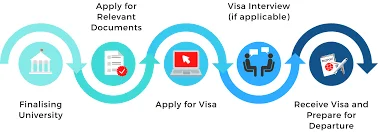
You cannot apply for the visa without the admission documents, and you should not book a flight without the visa. So a late application does not only delay the decision. It pushes every later step towards registration day. An applicant who submits by 15 December or 30 June has weeks of margin. An applicant who submits on 15 January or 15 August has almost none.
Visa processing is decided by the embassy or consulate, not by the university, and it differs from country to country and from month to month. Ask the visa office in your country for its current requirements as soon as you apply to the university, so that you are ready on the day the JW202 form arrives. The how-to-apply page explains the visa step in more detail.
| Step | What it is | What you do |
|---|---|---|
| Pre-Admission Letter | Confirms that your file has passed review | Pay the ¥2,000 seat reservation deposit so the university can process your JW202 form |
| JW202 form and admission letter | The documents you need for the student visa | Check every detail against your passport as soon as they arrive |
| Student visa | Issued by the Chinese embassy or consulate in your country | Apply as soon as you hold the admission documents and follow the embassy's current instructions |
| Travel and arrival | Your journey to Urumqi | Book the flight after the visa is issued and arrive before registration |
| Registration and orientation | Enrolment on campus | Bring original documents; the health check and residence permit follow |
Payments follow the steps, not the calendar. Knowing where each one sits helps a family plan its cash flow around the deadlines.
The published first-year package is ¥49,950, and the later yearly total is ¥35,950. The university has confirmed that fees for the 2027 intakes, March/Spring and September/Fall, are the same as for 2026.
| Payment | When | Note |
|---|---|---|
| Application fee, ¥1,000 | When you submit the application | Non-refundable once the Pre-Admission Letter is issued. It is part of the first-year package. |
| Seat reservation deposit, ¥2,000 | After the Pre-Admission Letter | Refunded if the JW202 is rejected. |
| First-year package | As set out in the written fee schedule | ¥49,950, confirmed for the 2027 intakes and unchanged from 2026. |
| Later years | Once a year | ¥35,950 a year, confirmed for the 2027 intakes and unchanged from 2026. |
The calendar marks the early deadline as recommended for scholarships. For 2027 that means 15 December 2026 for the March/Spring intake and 30 June 2027 for the September/Fall intake. The table shows the published stipends.
Scholarship places are limited, and applying by the early deadline puts you in consideration; it does not promise an award. Plan your budget as if you will pay the full fees, and treat a scholarship as a help if it comes.
| Scholarship | Undergraduate | Master's | Doctoral |
|---|---|---|---|
| Chinese Government Scholarship (tuition, accommodation and insurance free) | 30,000 | 36,000 | 42,000 |
| Xinjiang Government Scholarship for students from neighbouring countries | 10,000 | 12,200 | 15,000 |
China's Ministry of Education (MOE) publishes the list of universities allowed to enrol international students in the English taught MBBS, with a seat number for each. The notice in force was issued on 1 June 2026. It lists 43 universities and 2,790 seats, and Xinjiang Medical University is number 8 with 60 seats.
The next MOE list has not been published. It is usually issued around June, and this page will be updated when it appears. For a September/Fall 2027 applicant, that timing means the new notice is likely to arrive close to the early deadline of 30 June. Do not wait for it before you prepare. Prepare and apply on the published calendar, and check the new list when it is released.
Because each university has a fixed number of seats, it makes sense to apply early in the window. That is one more reason to read the regular deadline as the last date, not the target date.
Source: Ministry of Education of the People's Republic of China, notice 教外司来〔2026〕94号, issued 1 June 2026.
See the MOE listed MBBS universitiesVery few applicants miss a deadline because they forgot the date. They miss it for one of the reasons below, and all of them can be seen coming.
Each item is a dependency on someone else: an office, a school, a bank, a doctor. You control your own speed, not theirs. The practical rule is to start with whatever you cannot do yourself and to finish with what you can.
Set your own deadline two weeks before the published one and tell your family that date instead. It is a personal target, not a university date. If something goes wrong, you still have the real deadline in reserve.
Missing a date is disappointing, but with two intakes a year it rarely costs more than a few months. What you do next depends on which date you missed.
Apply anyway, as soon as the file is complete, and do not wait for the regular deadline. You may not be considered for a scholarship, and your margin for the visa is smaller, but the intake is still open until 15 January or 15 August.
Write to the admissions team and ask what is possible for your programme; dates may vary by programme, and only the admissions office can tell you. If the answer is no, move your file to the next intake. A March/Spring applicant who misses 15 January can apply for the September/Fall intake from 1 March, about six weeks later, with documents that are already prepared.
Tell the admissions team immediately and in writing. Do not travel without the visa, and do not assume that a late arrival is accepted. Ask what your options are and get the answer in writing.
The final entry in the calendar is registration and orientation: around 20 February for the March/Spring intake and around 10 September for the September/Fall intake. Everything before it, from the first scan to the visa, exists so that you can be on campus on that day with your original documents.
From there the six-year programme begins. It is taught in English, with Chinese classes alongside, and HSK-4 proficiency is required by graduation. Starting Chinese in the first week is the easiest way to meet that requirement without pressure in the later years.
If you want to know what the first weeks feel like in each season, the March/Spring intake guide covers a winter arrival, and the guide to life in Urumqi covers the city, food and daily costs.
The March/Spring intake lets you start an MOE listed MBBS in February or March 2027 instead of waiting for September. Here are the deadlines, requirements, documents, fees, visa steps and a plan to make the dates.
The complete guide to studying MBBS in China in 2027: who can apply, which universities are MOE listed, what an English taught MBBS costs, and how to prepare an application to Xinjiang Medical University (XJMU).
A clear breakdown of what an MBBS in China costs at Xinjiang Medical University, an MOE listed university: the first-year package, the yearly fees after that, the payments you make before you travel, everyday living costs and a six-year total you can check yourself.
Talk to our admissions counsellors for free guidance, or start your application online.