A plain guide for students and parents who want to know whether they can apply for the MBBS at Xinjiang Medical University: what the university asks for, how to work out your marks in each science subject, how each common situation is handled, which documents to prepare, and what to check before you pay anything.
XJMU asks for a senior high-school certificate (HSSC, FSc pre-medical, A-Level or equivalent) with at least 60% in each of physics, chemistry and biology, an age of 18 to 35, good health free from communicable diseases and a valid passport. No Chinese is needed to apply; the programme is taught in English. Each home medical council sets its own conditions, so check its current rules.
| Marks | 60% in each of physics, chemistry and biology |
|---|---|
| Age | 18 to 35 |
| Certificate | HSSC / FSc pre-medical, A-Level or equivalent, with science subjects |
| Health and passport | Good health, free from communicable diseases; valid passport |
| Documents | Passport, photo, XJMU form, Chinese medical form and blood report, police certificate, transcripts, self-introduction video |
| Language | Taught in English; no Chinese needed to apply; HSK-4 by graduation |
| Application fee and deposit | ¥1,000 application fee; ¥2,000 seat deposit after the Pre-Admission Letter |
| Intakes | March/Spring and September/Fall |
Most students who search for MBBS in China eligibility want one answer: can I apply, or not? For Xinjiang Medical University (XJMU) in Urumqi the published requirements are short. You need a senior high-school certificate with science subjects, at least 60% in each of physics, chemistry and biology, an age between 18 and 35, good health and a valid passport. You do not need to know Chinese to apply, because the programme is taught in English.
Short rules still leave many questions. What if your best subject is 75% but biology is 58%? What if you finished school three years ago? What if your final result has not been announced? This guide takes these cases one by one. Where the published requirements answer the question, we say so. Where they do not, we say that too, and we tell you to ask the admissions team in writing, because a guess from a website or an agent is not a decision of the university.
Eligibility is also only one of two checks. The university decides whether you may apply. Your own country's medical regulator decides what is required of a citizen who studies medicine abroad and wants to practise at home. This guide covers the first check in detail and points you to the right place for the second.

The table below turns the published requirements into a checklist. Read across each row: the requirement, what XJMU asks, and the document or step that proves it. If you can fill the last column for every row, you meet the published requirements.
The published requirements do not list an entrance examination, an English test score or a minimum aggregate. They also do not say how the university treats a case that falls outside the rows above. For those questions the correct step is a written question to admissions, which we describe later in this guide.
| Requirement | What XJMU asks | How to prove it |
|---|---|---|
| Senior high-school certificate | HSSC, A-Level or equivalent, with science subjects | Senior high-school transcripts and certificates |
| Marks | At least 60% in each of physics, chemistry and biology | The subject marks on your transcript, worked out one subject at a time |
| Age | 18 to 35 | The date of birth in your passport |
| Health | Good health, free from communicable diseases | The Chinese physical examination form and blood report |
| Passport | A valid passport | Your passport, with enough validity left |
| Character | A clean record | Police non-criminal record certificate |
| Identity and intent | A clear photograph and a short video | White-background photograph; self-introduction video saying you chose XJMU and will study there if accepted |
| Application | The university form | The completed XJMU application form |
| Language | The programme is taught in English; no Chinese is needed to apply | Your school record; ask admissions if your school did not teach in English |
The marks requirement is the one that decides most applications, and it is often misread. The requirement is 60% in each of the science subjects, which means physics, chemistry and biology. It is not 60% overall. A student with 85% in physics and chemistry and 55% in biology does not meet a rule that asks for 60% in each subject, even though the average is far above 60.
The reverse is also true. A student whose overall score looks modest can still meet the rule if every one of the three science subjects reaches 60%. Look at the subjects, not at the total.
It applies at senior high-school level: HSSC or FSc pre-medical, A-Level or an equivalent certificate. It is not a requirement about your marks in earlier classes, and it is not a requirement about an entrance test.
A medical degree builds on all three sciences. A rule that asks for 60% in each of them protects students from starting a six-year programme with a gap in one of the foundations. It is a floor, not a promise: meeting it lets you apply, and the university still reviews your file.
Work out the percentage for each subject yourself before you apply. It takes five minutes and removes the most common source of doubt. Use the marks printed on your own transcript, not a figure from memory.
Suppose a student's transcript shows physics 138 out of 200, chemistry 126 out of 200 and biology 119 out of 200. Physics is 138 divided by 200, which is 0.69, or 69%. Chemistry is 63%. Biology is 59.5%. The first two pass, but biology falls just short of 60%, so this student should not assume eligibility. They would write to admissions, show the transcript and ask how a result of 59.5% is treated.
Some certificates, including many A-Level and similar results, show grades instead of percentages. The published requirement is stated in percentages, and it does not explain how to convert a grade. Do not convert it yourself and assume the answer. Send admissions a copy of the certificate and ask in writing whether it meets the requirement and what, if anything, you need to provide.
The published text does not say how the university treats a result such as 59.6% or 59.9%. Treat any subject that sits close to the line as a question for admissions, not as a pass.
Applicants must be between 18 and 35 years old. The lower limit means that a student who is still 17 at the time of applying should ask admissions how the date is counted before preparing documents. The upper limit of 35 is generous, and it means that students who took a break from study, worked for some years or changed career can still apply.
The published rule gives the range but not the date on which age is counted, for example the date of application or the date of enrolment. If you are close to either limit, ask admissions which date applies and keep the reply.
Your passport shows your date of birth, and it is the document the university will check. Make sure the date in your passport matches the date on your school certificates. A mismatch is a common reason for delay, and it is far easier to fix before you apply than after.
The table below covers the situations we are asked about most. The middle column gives the answer that follows from the published requirements. Where those requirements do not cover your situation, the answer is to ask admissions in writing. We do not guess on behalf of the university, because a wrong guess costs you time and money.
Because the published rules are short on purpose. They set the main conditions and leave individual cases to the admissions team. A short written answer from the university is worth more than any forum thread, and it protects you if there is a misunderstanding later.
| Your situation | What the published requirements say | What to do |
|---|---|---|
| FSc pre-medical (or Class 12 science) with 60% or more in physics, chemistry and biology | Meets the marks requirement | Check age, passport and documents, then apply by the deadline for your intake |
| Overall marks above 60% but one science subject below 60% | The requirement is 60% in each science subject, so you do not clearly meet it | Do not pay a fee yet; write to admissions with your transcript and ask |
| Marks below 60% in all three science subjects | Does not meet the published marks requirement | Ask admissions whether any route exists; do not rely on an agent's promise |
| FSc pre-engineering, or science without biology | The requirement lists physics, chemistry and biology, and biology is not on your certificate | Ask admissions in writing whether your certificate can be considered |
| A-Level without biology | Biology is one of the three listed subjects | Ask admissions in writing, and attach your certificates |
| A-Level with physics, chemistry and biology at 60% or more in each | A-Level is named as an accepted certificate | Prepare transcripts and certificates, and ask how grades are assessed if no percentage is shown |
| Gap year since school | The published requirements do not set a time limit since graduation | Check that you are within 18 to 35; ask admissions if you want written confirmation |
| Age over 35 | Outside the published range of 18 to 35 | Ask admissions whether any exception exists; do not assume one |
| Final-year result not yet announced | The requirements refer to your certificate and transcripts, which you do not yet hold | Ask admissions in writing what they accept before the result, and when to send the final documents |
| Studied in a school that did not teach in English | The published requirements do not list an English test | Ask admissions whether they want any proof of English |
| Health condition or past illness | Good health and freedom from communicable diseases are required | Take the Chinese physical examination form to your doctor and follow the result |
Students from Pakistan usually ask about MBBS in China after FSc, and students from India and Nepal ask about it after the 12th. The question is the same: does my science certificate meet the requirement? For XJMU the certificate must have science subjects, with at least 60% in each of physics, chemistry and biology.
For an FSc pre-medical student this is normally a direct match, because the pre-medical group studies exactly those three subjects. For a Class 12 student, check that biology is one of your subjects and that your marks in each of the three reach 60%. Students from other systems, such as Bangladesh's HSC or African senior secondary certificates, should compare the certificate with the same test: senior high-school level, science subjects, 60% in each.
If you are about to take your final examination, you cannot yet prove the 60% requirement. The published requirements do not describe how a pending result is handled. Ask admissions in writing which documents they will accept now, such as predicted marks or a provisional statement, and when the final transcript must arrive. Do not assume that an application can go forward without it.
Systems differ in how many years the certificate covers and how marks are reported. What matters is that the transcript shows your marks in the three science subjects clearly. If it does not, ask your board for a detailed marks certificate before you apply.
Students often ask whether IELTS or TOEFL is needed. XJMU's published requirements do not list an English test score. That is the fact we can state. We do not say that no student will ever be asked for proof of English, because we cannot speak for every case. If your school did not teach in English, or if you are unsure, ask admissions in writing what, if anything, they want to see.
The programme itself is taught in English. You do not need Chinese to apply. Introductory Chinese is taught in years 1 and 2, and HSK-4 Chinese is required by graduation. HSK-4 matters because the clinical years put you in front of patients and hospital staff, and a working command of Chinese makes those years far easier.
You do not have to study Chinese before you apply, but a few weeks of basic vocabulary before you travel will make the first month easier. Keep reading and listening to English every day, because lectures, textbooks and examinations are in English.
The published document list has seven items. Prepare them early, because some depend on other offices: the police certificate and the medical report in particular take time.
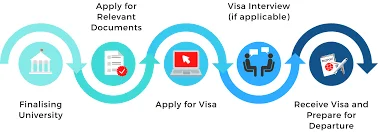
Use a passport that is valid and in good condition, and scan every page that carries information. Check that your name is spelled the same way in the passport and on your certificates. If the spelling differs, ask your school or board how to correct it, or keep a written explanation ready.
The photograph must have a white background. Use a recent, clear photo of your face. Complete the XJMU application form carefully: names, dates and numbers should match your passport exactly.
This must be the Chinese physical examination form, not a general medical certificate. Take the form to a doctor or hospital and ask them to complete every section. Do not leave blanks, and keep a copy.
Apply to the relevant police office in your country as early as you can, because processing times vary. Ask admissions how the certificate should be presented, for example whether it needs any extra stamp or translation.
Scan the originals clearly, with all marks legible. If any document is not in English, ask admissions how they want it translated. If the admissions team tells you that a document must be attested or notarised, do exactly as they instruct and keep the receipts. Do not pay for attestation or notarisation before you are told it is needed.
In the video you say that you have chosen XJMU and that you will study there if you are accepted. Speak clearly, face the camera, record in a quiet room with good light, and keep it simple. The video is a statement of your own choice, so use your own words.
A complete, consistent file is reviewed faster than one that needs questions. These habits prevent most delays.
Scan each document as a clear colour copy, and name each file plainly, for example passport, transcript, medical report. Check that every page is readable and the edges are not cut off.
Put your passport, certificates, application form and medical form side by side. The full name, date of birth and passport number should be consistent wherever they appear. Fix any difference before you submit.
The police certificate and the physical examination can take longer than the rest. Start them as soon as you decide to apply, and plan so that they do not expire before the deadline.
Save the written replies from admissions, receipts for any payment and copies of what you submitted. If a question comes up later, you will have the answer in your own records.
Attestation, notarisation, translation and similar steps should be done as the admissions team instructs. If anyone tells you that you must pay for such a step and the admissions team has not asked for it, check with admissions first.
Eligibility is free to check, and you should not pay anything before you know that you meet the requirements. The published payments are few. The application fee is ¥1,000. It is non-refundable once the Pre-Admission Letter is issued, and it is part of the first-year package. After the Pre-Admission Letter you pay a seat deposit of ¥2,000, which is refunded if your JW202 visa letter is rejected.
The first-year package is ¥49,950, about USD 7,000. From the second year the cost is ¥35,950 a year, about USD 5,050, and the six-year university fees total about ¥229,700. These are the published figures, and the fee guide below explains what each includes.
Pay only through the channel that the admissions team confirms in writing, and only after you have checked the requirements. Keep every receipt.
See the full MBBS in China fee guideThe university does not publish a list of refusal reasons, so the points below are general. They are common problems that can make an application file stop or slow down. They are not a list of the university's rules.
The most common problem is a student who looked at the overall score and missed that one subject was under 60%. Check each subject before you apply.
A transcript with unreadable marks, a medical form with blank sections or a photograph with the wrong background all lead to requests for resubmission. Each request adds days.
Different spellings of a name, a different date of birth or a passport number that does not match the form can hold up a file while the difference is explained.
Passports that are about to expire can cause trouble at the visa stage. Check the validity date before you apply and renew first if needed.
Good health and freedom from communicable diseases are requirements. A report that is incomplete, or that does not use the required form, delays the review.
Each intake has an early deadline and a regular deadline. A complete file that arrives late may miss the intake. The calendar below shows the published dates.
Be careful with anyone who promises admission, asks you to pay before checking your marks, or tells you that the rules do not apply to you. Only the university decides admission, and no one can guarantee it.
| Step | September/Fall intake (September) | March/Spring intake (February/March) |
|---|---|---|
| Applications open | 1 March | 1 September |
| Early deadline (recommended for scholarships) | 30 June | 15 December |
| Regular deadline | 15 August | 15 January |
| Registration and orientation | 10 September | 20 February |
Meeting the university's requirements lets you apply. It does not tell you what your home regulator requires. XJMU is on the Ministry of Education list for 2026-2027, at number 8 of 43 with 60 seats, and it is ECFMG eligible and recognised by PMDC, NMC and other councils. Each council sets its own conditions, so check its current rules before you apply.
For Indian students the National Medical Commission rules apply, and NEET is generally required before studying abroad. Rules change, so verify the NMC's current text yourself and keep a copy of the page you rely on. XJMU's own published requirements are separate from the NMC's conditions.
For Pakistani students the PMDC rules apply. Read what PMDC currently requires, including anything about entry tests, before you pay a fee.
Find the regulator in your own country that registers doctors, and read its current conditions for graduates of foreign medical schools. Ask it in writing if the text is unclear.
Answer each question honestly. If you can answer yes to all ten, you meet the published requirements and can prepare your application. If any answer is no or unsure, resolve it first.
A no is not the end of the plan. It tells you what to do next: fix the passport, request the transcript, start the police certificate, or write to admissions about the marks. Fixing it early costs little. Finding out after you pay costs a great deal.
When your situation is not covered by the published requirements, a clear written question is the best step. Admissions answers faster when the question is specific and the evidence is attached.
A phone call or a chat message from an agent is not a record. Ask for a reply in writing from the admissions team, and keep it with your documents.
The eligibility rules are the same for both intakes. The difference is timing. The September/Fall intake opens for applications on 1 March, with an early deadline of 30 June and a regular deadline of 15 August. The March/Spring intake opens on 1 September, with an early deadline of 15 December and a regular deadline of 15 January. Registration is on 10 September and 20 February respectively.
Timing matters for eligibility in two ways. If your result is pending, check whether it will be issued in time for the deadline. If your passport or police certificate needs renewing, count the weeks it takes. The earlier you start, the more room you have to fix a problem without missing the intake.
See March/Spring intake dates and deadlinesFirst, work out your marks in physics, chemistry and biology from your own transcript. Second, check your age and passport. Third, read your home medical council's current rules. Fourth, start the documents that take longest. Fifth, write to admissions with any question the published requirements do not answer, and keep the reply.
Nothing in this guide is a promise of admission. It tells you what the university publishes and how to prepare a file that the admissions team can review quickly.
The complete guide to studying MBBS in China in 2027: who can apply, which universities are MOE listed, what an English taught MBBS costs, and how to prepare an application to Xinjiang Medical University (XJMU).
A careful explainer for Pakistani students and parents: what Xinjiang Medical University asks for admission, what the Pakistan Medical and Dental Council (PMDC) asks before you go and after you graduate, how the MDCAT rule has changed, and how to check every point on the PMDC website before you pay a deposit.
A clear breakdown of what an MBBS in China costs at Xinjiang Medical University, an MOE listed university: the first-year package, the yearly fees after that, the payments you make before you travel, everyday living costs and a six-year total you can check yourself.
Talk to our admissions counsellors for free guidance, or start your application online.