The question most American and Canadian families really ask is not whether you can study medicine in China, but whether you can become a licensed doctor at home afterwards. This guide takes the Chinese side first (the Ministry of Education list, entry requirements, visa and cost) and then the North American side, rule by rule, with each rule taken from the official page of the body that sets it and the date we read it.
Not on the degree alone. In the US, a graduate of a school in China follows the international medical graduate route: ECFMG Certification, USMLE, residency, state licence. In Canada it runs through MCC examinations, CaRMS and a provincial licence. Eligibility depends on your school and graduation year, so check ECFMG, the MCC and your province before you pay.
| US graduates abroad | Treated as international medical graduates (IMGs) by ECFMG |
|---|---|
| ECFMG school check | School must be in the World Directory with an ECFMG Sponsor Note that includes your graduation year |
| USMLE for ECFMG Certification | Step 1 and Step 2 CK, plus a clinical skills pathway |
| US residency | ACGME requires ECFMG Certification for IMGs in ACGME-accredited programmes |
| Canada | MCCQE and NAC for the CaRMS R-1 Match; licence granted by the province or territory |
| MOE status | XJMU is number 8 of 43 universities, 60 seats (MOE notice, 1 June 2026) |
| XJMU ECFMG status | ECFMG eligible; confirm on the ECFMG and World Directory pages |
| XJMU entry | 60% in each of physics, chemistry and biology; aged 18 to 35 |
| XJMU fees (2027, as 2026) | ¥49,950 first year, then ¥35,950 a year; about ¥229,700 over six years |
| Intakes | March/Spring and September/Fall |
Students in the United States and Canada, including citizens whose families come from Asia, Africa or the Caribbean, look at an MBBS in China for practical reasons: a six-year course taught in English, a published fee in yuan that can be planned for, and a degree that leads to the same kind of licensing route that any graduate of a medical school outside the United States or Canada follows.
Be clear about one thing before you read further. A medical degree from China does not by itself allow you to practise in the United States or Canada. In the United States, a graduate of a school outside the country goes through ECFMG Certification, the United States Medical Licensing Examination (USMLE), a residency programme and a state licence. In Canada, the route runs through the Medical Council of Canada examinations, the CaRMS residency match and a provincial or territorial licence. Every one of those steps is set by a North American body, not by the Chinese university and not by us.
That is why this page is organised the way it is. We state the Chinese facts we can stand behind, and for each North American rule we name the official body, say what its page says, and give the date we read it. Where we could not open an official page, we do not state the rule. We write "check the current rules with" that body instead. Rules change, so treat every statement here as a starting point for your own check, not as advice that replaces the official page.
Nothing in this guide is a promise. No university, agent or website can guarantee that you will pass an examination, match to a residency or be granted a licence. What a good decision needs is accurate information about each step, and that is what we set out below.
The short answer is that it depends on your school, your graduation year and on examinations you must pass yourself. It is not a yes or no decided on the day you enrol. The table sets out the route in the order you meet it, and the sections that follow give the detail and the source for each step.
ECFMG says that what makes someone an international medical graduate (IMG) is where the medical degree was earned, not citizenship. In its words, U.S. citizens who graduated from medical schools outside the United States are considered IMGs. So an American who graduates in China follows the IMG route, with the same requirements as any other IMG.
| Step | United States | Canada |
|---|---|---|
| 1. Your medical school | Must be listed in the World Directory of Medical Schools with an ECFMG Sponsor Note that includes your graduation year | Must be a school listed in the World Directory that CaRMS describes as recognised in Canada; ask the college that licenses doctors in your province what else it requires |
| 2. Examinations | USMLE Step 1 and Step 2 CK, plus a clinical skills pathway, for ECFMG Certification; Step 3 later | MCCQE and the NAC Examination for the CaRMS R-1 Match |
| 3. Residency | Apply through ERAS and the NRMP Match; ACGME requires ECFMG Certification for IMGs entering ACGME-accredited programmes | Apply through CaRMS; eligibility is limited to Canadian citizens and permanent residents, with some exceptions |
| 4. Licence | Granted by a state; ECFMG says state authorities require ECFMG Certification, among other requirements, for an unrestricted licence | Granted by the provincial or territorial medical regulatory authority, not by the MCC |
As published by ECFMG (Intealth), the USMLE programme, the NRMP, the Medical Council of Canada and CaRMS, read on 25 November 2026. Each is explained, with its source, in the sections below.
In China the Ministry of Education (MOE) decides which universities may enrol international students on an English-taught MBBS. The list in force for 2026–2027 comes from MOE notice 教外司来〔2026〕94号, issued on 1 June 2026. It names 43 universities with 2,790 seats between them. Xinjiang Medical University (XJMU) is number 8 on that list, with 60 seats.
Why does a student in Texas or Ontario need to know about a Chinese ministry list? Because it tells you whether the programme itself is one the Chinese government approves for international students, and because your North American steps depend on a real, documented programme. The MOE list does not replace the North American checks that follow, and the North American checks do not replace the MOE list. You need both.
The full list, with seats for every university, is on our page about MOE listed universities. We do not compare or rank universities on this site, and we do not quote another university's fees or seats from memory. If you are comparing schools, take each figure from the MOE notice or from that university's own official page, and ask for the answers in writing.

| Item | Detail |
|---|---|
| Issuing body | Ministry of Education of the People's Republic of China |
| Notice | 教外司来〔2026〕94号, issued 1 June 2026 |
| Universities on the list | 43 |
| Total seats | 2,790 |
| Xinjiang Medical University | Number 8, 60 seats |
Each university publishes its own entry requirements, so there is no single list that applies to all of China. As a worked example, here are the published requirements of Xinjiang Medical University for the MBBS. They are the university's requirements and are separate from anything a North American licensing body asks of you.
XJMU requires a senior high-school certificate (HSSC, A-Level or equivalent) with science subjects, and at least 60% in each of physics, chemistry and biology. The requirement is per subject, so a good overall average does not cover a weak subject.
US high schools and Canadian provinces grade and name their courses in different ways. We do not translate a transcript into a percentage on this page. Send admissions your transcript and ask them to confirm in writing how your diploma and science courses are assessed against the 60% requirement before you pay anything.
Applicants must be between 18 and 35 years old.
XJMU does not require the CSCA test for admission to its MBBS. We say nothing here about the entrance rules of other universities. Whether your own licensing route asks for any test before or after the degree is a separate question, answered in the North American sections below.
Read the full MBBS in China eligibility guideFees in China are published in yuan, and that figure is the one that is fixed. XJMU's fees for 2027 are the same as for 2026. The first-year package is ¥49,950 and each later year is ¥35,950, which is about ¥229,700 over six years. The table converts those amounts into US and Canadian dollars so you can compare them with tuition at home.
The conversion is a guide, not a quote. The exchange rate moves every day, and banks and transfer services charge a margin above the mid-market rate, so budget a few percent more than the table shows. The US dollar figures are the university's own rounded amounts, the same as on every other page of this site, and the Canadian dollar figures are calculated from the Bank of Canada rate stated in the caption. Because the university's dollar figures are rounded, and the exchange rate moves, your bank may show a different dollar total on the day you pay. The yuan amount is the fixed fee.
The first-year package of ¥49,950 covers application processing, registration and admission charges, the tuition fee, hostel accommodation, the student visa, health insurance and medical, the JW202 visa letter and airport pickup. From the second year the ¥35,950 is made up of tuition (¥30,000), accommodation (¥4,500), insurance (¥300), residence permit (¥800) and physical examination (¥350).
Flights between North America and Urumqi, food and daily living costs, and the HSK examination fee are extra. We do not publish flight prices because they change too quickly to be reliable. Add them, plus the cost of the examinations you will take on the way home, which are set by the examining bodies and are published on their own sites. We have not copied those fees here.
| Fee | Chinese yuan | US dollars | Canadian dollars |
|---|---|---|---|
| First-year package | ¥49,950 | USD 7,000 | CAD 10,700 |
| Each later year | ¥35,950 | USD 5,050 | CAD 7,700 |
| Six years in total | ¥229,700 | USD 32,000 | CAD 49,300 |
ECFMG, the Educational Commission for Foreign Medical Graduates, now part of Intealth, is the body that evaluates the qualifications of international medical graduates who enter the US health care system. Its Certification overview page, which we read on 25 November 2026, gives three reasons it matters. The ACGME requires IMGs who enter ACGME-accredited residency or fellowship programmes to be certified by ECFMG. ECFMG Certification is one of the eligibility requirements for IMGs to take Step 3 of the USMLE. And medical licensing authorities in the United States require IMGs to be certified by ECFMG, among other requirements, to obtain an unrestricted licence.
In practice, ECFMG Certification is the doorway to residency and to Step 3, as the three reasons above show. ECFMG sets out what it requires in four parts, and we summarise each below as published on that page.
ECFMG says that the individual's graduation year must be included in the ECFMG Sponsor Note in the school's World Directory listing. This is the single most important check for a student who is about to enrol. The Sponsor Note is not a permanent label on the school. It names the graduation years for which the school meets ECFMG's requirements. Look at the years it lists and compare them with the year you would graduate.
ECFMG says the clinical skills Pathways are offered on a seasonal application cycle and an accepted Pathway is subject to expiration. An accepted, unexpired Pathway is required to become ECFMG Certified, and also to take part in the NRMP Match. Read ECFMG's own pages on the Pathways before you plan the timing of your final year.
ECFMG says it has set time limits and other rules for completing the examination requirements. We do not copy them here. They are in the ECFMG Information Booklet, and they are the kind of rule that is updated from time to time.
| Requirement | What ECFMG says |
|---|---|
| Medical school | The school must meet ECFMG requirements and be listed in the World Directory of Medical Schools with an ECFMG Sponsor Note, which also states the graduation years covered. With no Sponsor Note, students and graduates are not eligible |
| Credit years | At least four credit years awarded by a school listed with an ECFMG Sponsor Note; there are restrictions on transferred credits |
| Medical science examinations | Pass USMLE Step 1 and Step 2 Clinical Knowledge (CK); IMGs apply for the USMLE through the Federation of State Medical Boards (FSMB) |
| Clinical and communication skills | Satisfy an ECFMG Pathway, which includes a satisfactory Occupational English Test (OET) Medicine score, or hold a passing performance on the former Step 2 CS |
| Diploma and transcript | ECFMG verifies the medical diploma with the issuing school and requests the final transcript |
Many websites say that students must graduate from an accredited medical school to be eligible for ECFMG Certification, and some give years such as 2023 or 2024. The rule has changed shape over time, so go to ECFMG's own words. On its Recognized Accreditation Policy page (read on 25 November 2026), Intealth states that the policy does not affect an individual's eligibility for ECFMG Certification, and that IMGs can continue to apply for and pursue ECFMG Certification even if their medical school currently does not meet the requirements of the policy, as long as the school meets ECFMG's current requirements.
The same page explains what the policy does do. A school that is accredited by an agency recognised by an organisation that Intealth has approved meets the policy, and Intealth has so far approved two such organisations, the World Federation for Medical Education (WFME) and the National Committee on Foreign Medical Education and Accreditation (NCFMEA). If a school currently meets the policy, a notation saying so is included on the Sponsor Notes tab of its World Directory listing. Intealth describes that notation as an additional data point for U.S. programme directors on the educational background of IMGs applying to U.S. graduate medical education.
Notice what the page does not say. It does not say that a school with the notation is automatically eligible, because it also says that a school must hold an ECFMG Sponsor Note for its students and graduates to be eligible to apply. And it says that the policy may continue to evolve at Intealth's sole discretion. So the accurate advice is short. Open the World Directory, find the school, read the Sponsor Notes tab, and write down exactly what it says about the ECFMG Sponsor Note, the graduation years and the policy notation. Do this again before you enrol and again in your final year, and do not rely on anyone's summary, including ours.
How the World Directory (WDOMS) worksThe USMLE is the examination sequence for US medical licensure. For an international medical graduate the rules on the USMLE website (read on 25 November 2026, page undated, footer 1996–2026) are these.
The USMLE programme recommends that examinees have completed, or be near completion of, at least one postgraduate training year in an accredited US graduate medical education programme before Step 3. That is a recommendation, not an eligibility rule, as the page states it.
We do not publish pass rates, preparation advice or a timetable for the Steps. Examination content, fees and application windows change, and the USMLE and ECFMG sites are the only reliable place to read them.
A residency is the paid training programme a new doctor must complete in order to be licensed to practise independently. The NRMP, which runs the Main Residency Match, publishes the rules for IMGs. According to its eligibility page for applicants (read on 25 November 2026, no date shown), IMGs must have completed the medical science examination, clinical skills and communication skills requirements. NRMP sends weekly lists of registered IMG applicants to ECFMG, and ECFMG, not the NRMP, determines whether the applicant is verified.
The page adds two points that matter for planning. Verification must be completed by the Rank Order List Certification Deadline, and IMGs who have not met the requirements by then cannot take part in the Match. And to begin residency training, an IMG needs full ECFMG Certification, not only verification for the Match. NRMP also notes that graduates of Canadian medical schools from 1 July 2025 are treated as IMGs for this purpose, which shows how the IMG definition follows where the degree was earned.
Visa questions arise for physicians who are foreign nationals. ECFMG's Exchange Visitor Sponsorship Program page (last updated 18 August 2025, read on 25 November 2026) says that the J-1 is one visa commonly used by foreign national physicians entering US graduate medical education, and that ECFMG is the sole sponsor of J-1 physicians in clinical training programmes. If you hold citizenship or status in another country as well, ask each residency programme which visa types it sponsors. We do not state any other visa rule here because we did not confirm one from an official page.
We have not found an official statement of what residency programme directors prefer in applicants from particular countries or schools, so we say nothing about it, and we do not quote match rates. What the official page does say is that the World Directory notation on the Recognized Accreditation Policy is an additional data point for U.S. programme directors. Look at the programmes you hope to join, and read what each one publishes about the IMGs it considers.
American families often ask whether federal student loans can be used for a medical school abroad. The answer depends on the school, not on the student. Intealth's Recognized Accreditation Policy page explains one part of the rule: a determination of comparability by NCFMEA, which the U.S. Department of Education authorises to evaluate a country's accreditation standards for its medical schools, is required for a country's medical schools to take part in the William D. Ford Federal Direct Student Loan Program.
We tried to read the Federal Student Aid list of foreign schools that take part in federal loan programmes, but its server refused our requests, so we cannot tell you whether any school in China is listed, and we do not guess. Ask the school's admissions office whether it takes part in the Direct Loan Program, and check the school's name on the Federal Student Aid foreign schools list on studentaid.gov yourself. If it is not on the list, plan on private funds or other sources, and ask your financial aid office about anything else you intend to use.
Canadian students should ask the student aid office of their own province or territory about funding for study abroad. We do not state any provincial rule here because we did not read one.
In Canada, three bodies matter. The Medical Council of Canada (MCC) runs the national examinations and issues the Licentiate of the Medical Council of Canada. CaRMS, the Canadian Resident Matching Service, runs the residency match. And the provincial and territorial medical regulatory authorities grant the licence to practise. The MCC's pathways to licensure page (read on 25 November 2026; the page is marked © 2026) says that candidates apply to the regulatory authority for registration and should check the requirements of each jurisdiction where they want to practise.
For many Canadian families the most important line on the CaRMS page is that eligibility is limited to Canadian citizens and permanent residents, with some exceptions. If you are a Canadian citizen studying in China, you are within that group. Read the page for the current year, since the eligibility criteria are revised for each match.
The MCC and CaRMS pages say that some provinces add their own assessment programmes for international medical graduates. The MCC names the University of British Columbia's Clinical Assessment Program for British Columbia, the Alberta International Medical Graduate Program for Alberta, and the Collège des médecins du Québec's recognition of equivalence of the MD degree for Quebec. If you already know where you hope to practise, read that province's regulatory authority page before you enrol.
The MCC's page also mentions a notice titled Important update to LMCC eligibility and issuance, starting 26 January 2026. We have not summarised it here. Read it on the MCC site, because it changes how the licentiate is issued.
We did not read each provincial authority's own licensing page, so we do not state what any province requires beyond the points above. Check the current rules with the College of Physicians and Surgeons, or equivalent regulatory body, of the province where you intend to practise.
| Point | What the official page says |
|---|---|
| Who can apply | CaRMS lists Canadian citizens and permanent residents, and says some exceptions may apply (CaRMS eligibility criteria, read 25 November 2026) |
| Medical degree | Held or being obtained by 1 July of the match year, from an international medical school listed in the World Directory of Medical Schools that is recognised in Canada (CaRMS) |
| Examinations | NAC Examination and MCCQE; some provinces allow exceptions to either exam (CaRMS); the MCC confirms that IMGs must provide MCCQE and NAC results for the R-1 Match (MCC) |
| First iteration | No previous RCPSC, CFPC or ACGME accredited postgraduate training, with exceptions (CaRMS) |
| Provincial steps | British Columbia, Alberta and Quebec require a provincial assessment or recognition before you apply; Ontario introduced new IMG requirements for the 2026 Match (CaRMS, MCC) |
Whichever school you consider, in China or elsewhere, four checks come first. They take about an hour and they are all free.
XJMU is ECFMG eligible as of the date of this guide. We state only this, and we ask you to confirm it yourself on the ECFMG and World Directory pages, because the rules and the lists change and the graduation years in a Sponsor Note matter. The same advice applies to every other university in China.
We do not write that a North American body recognises or approves a Chinese university unless that body's own page says so about that university. When an agent tells you that a school is recognised in the United States or Canada, ask for the official page that says it, and read the page yourself.
Why universities not on the MOE list carry risksAt XJMU the MBBS is six years: five years of study followed by a one-year internship. It is taught in English, with introductory Chinese in years 1 and 2. The first years cover the basic medical sciences. Teaching then moves towards clinical subjects, with hospital rotations and a final-year internship. The university has 18 teaching hospitals and 95 internship hospitals, so clinical teaching does not depend on one site.
Look at the programme through the eyes of the North American steps. ECFMG requires at least four credit years from a listed school and verifies your diploma and final transcript with the school. The USMLE Step 1 and Step 2 CK examinations are sat while you are enrolled or after graduation, so ask the university how it supports students who plan to sit them, and how it handles transcript and diploma verification requests from ECFMG.
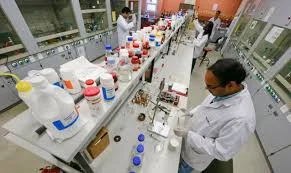
In the clinical years you learn in hospitals where patients speak Chinese. That is why the language requirement exists, and it is also why students who plan to work in North America should think about how they will practise English-language clinical communication. The ECFMG requirement for communication skills, which includes the OET Medicine test, is a reminder that clinical English is assessed too.
Before you pay, ask for written answers to these questions: how many weeks of the clinical programme are completed in each hospital, how the internship is assessed, how requests from ECFMG or from a Canadian regulatory authority for a diploma, transcript or confirmation of study are handled, and how long they take. A school that answers precisely is easier to plan around.
How the English-taught MBBS worksA medical degree is built on contact with patients. In the later years you spend your time in teaching hospitals, learning to take histories, examine patients and work in a team under supervision. At XJMU the First Affiliated Hospital is a Class A tertiary hospital, and the clinical years are shared across the affiliated, teaching and internship hospitals named above.
Do not take a promise about hospital placements from a brochure. Ask which hospitals your year group will use, in which language each ward works and how rotations are timetabled. Then ask to speak to a current international student.

An MBBS student needs the X1 visa, which the Chinese Embassy in the United States says is issued to those who intend to study in China for more than 180 days. The embassy's page, Requirements and Procedures for Chinese Visa Application (page dated 22 September 2025, read on 25 November 2026), lists for higher-education students the Confirmation Form for Study in China (Form JW201 or Form JW202) and a photocopy of the admission letter issued by the Chinese school. XJMU's admission process names the JW202, which the university issues together with the admission letter.
The same page says applicants fill in forms and upload material through the New COVA online application system, which launched at the embassy on 30 September 2025, and that regular processing takes four business days on average, with an express service of three business days. Treat those as averages, not promises, and do not book flights before the visa is in your passport. The embassy's consular district covers a list of states set out on the page. If you live elsewhere in the United States, check which Chinese consulate covers your address.
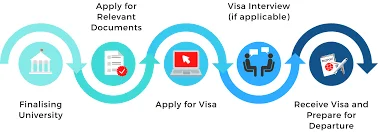
We did not read a Chinese embassy or consulate page for Canada in this session, so we state no Canadian visa rule here. Find the Chinese embassy or consulate, or the visa application service centre, that covers your province, and read its X1 checklist and its dated instructions.
The US embassy page lists proof of legal status for foreign nationals who apply in the United States. If you are a permanent resident, a visa holder or a dual citizen, read the page for what it asks in your case. This is another reason to read the embassy page and not a summary.
The X1 visa is converted into a residence permit after you arrive, and the application must be made within 30 days of entry, as set out in our China student visa guide. XJMU lists ¥800 for the residence permit and ¥350 for the physical examination from the second year.
Read the full China student visa guideAt XJMU the lectures and examinations in the medical subjects are in English. Introductory Chinese is taught in years 1 and 2, and HSK level 4 is required by graduation. In the clinical years patients speak Chinese, so you will use it at the bedside, and daily life in Urumqi is in Chinese.
For students from North America, the practical point is to start early. Learn the basics before you go, keep up the lessons in the first two years, and take the HSK examination in good time so that nothing delays your graduation. An HSK fee is an extra cost paid by students.
See the HSK guide for MBBS studentsThe application steps are the same for every international applicant. Follow them in order, and keep a copy of every receipt and message.
Prepare these early. Several are used again at the embassy and after arrival.
The March/Spring intake and the September/Fall intake both start from the same application. The dates above are the published calendar, and they may vary by programme, so confirm them with admissions.
| Step | September/Fall intake (September) | March/Spring intake (February/March) |
|---|---|---|
| Applications open | 1 March | 1 September |
| Early deadline (recommended for scholarships) | 30 June | 15 December |
| Regular deadline | 15 August | 15 January |
| Registration and orientation | 10 September | 20 February |
So that you can check every rule yourself, the table lists each North American and Chinese rule used above, the body that publishes it and the date we read it. All pages were read on 25 November 2026. Where a page shows its own date, we give it.
We could not confirm from an official page: whether any school in China takes part in US federal student loans, any H-1B rule for physicians, any state licensing board's rule, any province's licensing rule, any Canadian visa rule, and any statement of what residency programme directors prefer. For each we say nothing beyond "check the current rules with" the body named above.
| Rule | Published by | Page |
|---|---|---|
| ECFMG Certification requirements, IMG definition, Sponsor Notes, Pathways | ECFMG (Intealth) | ecfmg.org/certification |
| Recognized Accreditation Policy; no effect on eligibility for ECFMG Certification or the USMLE | Intealth | intealth.org/accreditation |
| J-1 sponsorship of physicians in clinical training (page updated 18 August 2025) | ECFMG Exchange Visitor Sponsorship Program | ecfmg.org/evsp |
| USMLE eligibility, attempt limits, Step 3 | USMLE programme | usmle.org, Bulletin of Information, eligibility |
| IMG verification and certification for the Main Residency Match | NRMP | nrmp.org, Are You Eligible? |
| MCCQE and NAC for the R-1 Match; provincial licensing | Medical Council of Canada | mcc.ca, pathways to licensure |
| R-1 eligibility for international medical graduates | CaRMS | carms.ca, R-1 eligibility criteria |
| X1 visa documents and processing (page dated 22 September 2025) | Chinese Embassy in the United States | us.china-embassy.gov.cn |
| Daily exchange rates for the fee table | Bank of Canada | bankofcanada.ca, Valet API, FXCNYCAD and FXUSDCAD |
| English-taught MBBS list for 2026–2027 | Ministry of Education of the People's Republic of China | Notice 教外司来〔2026〕94号, 1 June 2026 |
These patterns cause trouble, and each is avoidable.
An agent, a video or a forum post may be out of date even when the writer means well. Read the official page, note its date and keep a copy. ECFMG says its Recognized Accreditation Policy will continue to evolve, which is a reminder that what was true last year may not be today.
The ECFMG Sponsor Note lists the graduation years it covers. Check that your expected graduation year is included, and check again in your final year.
A school's presence on the MOE list or in the World Directory is a useful fact. It is not a promise about your examinations, your residency or your licence.
Pay only to the university or to a payment channel it has confirmed in writing, keep every receipt and never pay for a guaranteed scholarship, a guaranteed visa or a guaranteed residency place. Nobody can guarantee those.
The degree is the middle of the journey. Plan for ECFMG Certification or the MCC examinations, for the residency match and for the licence at the end, and plan the cost and time of each step.
Read what happens after MBBS in ChinaThe complete guide to studying MBBS in China in 2027: who can apply, which universities are MOE listed, what an English taught MBBS costs, and how to prepare an application to Xinjiang Medical University (XJMU).
A clear breakdown of what an MBBS in China costs at Xinjiang Medical University, an MOE listed university: the first-year package, the yearly fees after that, the payments you make before you travel, everyday living costs and a six-year total you can check yourself.
A plain guide for students and parents who want to know whether they can apply for the MBBS at Xinjiang Medical University: what the university asks for, how to work out your marks in each science subject, how each common situation is handled, which documents to prepare, and what to check before you pay anything.
A step-by-step guide to the China student visa for MBBS students: from the Pre-Admission Letter and JW202 form to the X1 visa application in your home country, the residence permit after arrival and the yearly renewal. Visa rules are quoted from official embassy pages, with the date we checked them.
The 43 universities that China's Ministry of Education has approved to teach MBBS in English to international students, with seat quotas, the rules behind the list and how to check any university yourself.
What "WHO listed" really means today, how the World Directory of Medical Schools (WDOMS) works, how to check any Chinese medical university yourself, what ECFMG and the USMLE require, and why WDOMS listing is only one of the checks you need.
An honest guide to what you can do after an MBBS at Xinjiang Medical University: going home and passing your national licensing examination, moving towards the USA, the UK, the Gulf, Australia or Canada, continuing to postgraduate study in China, or building a career outside the clinic, with a year-by-year plan for the six years of the degree.
Talk to our admissions counsellors for free guidance, or start your application online.